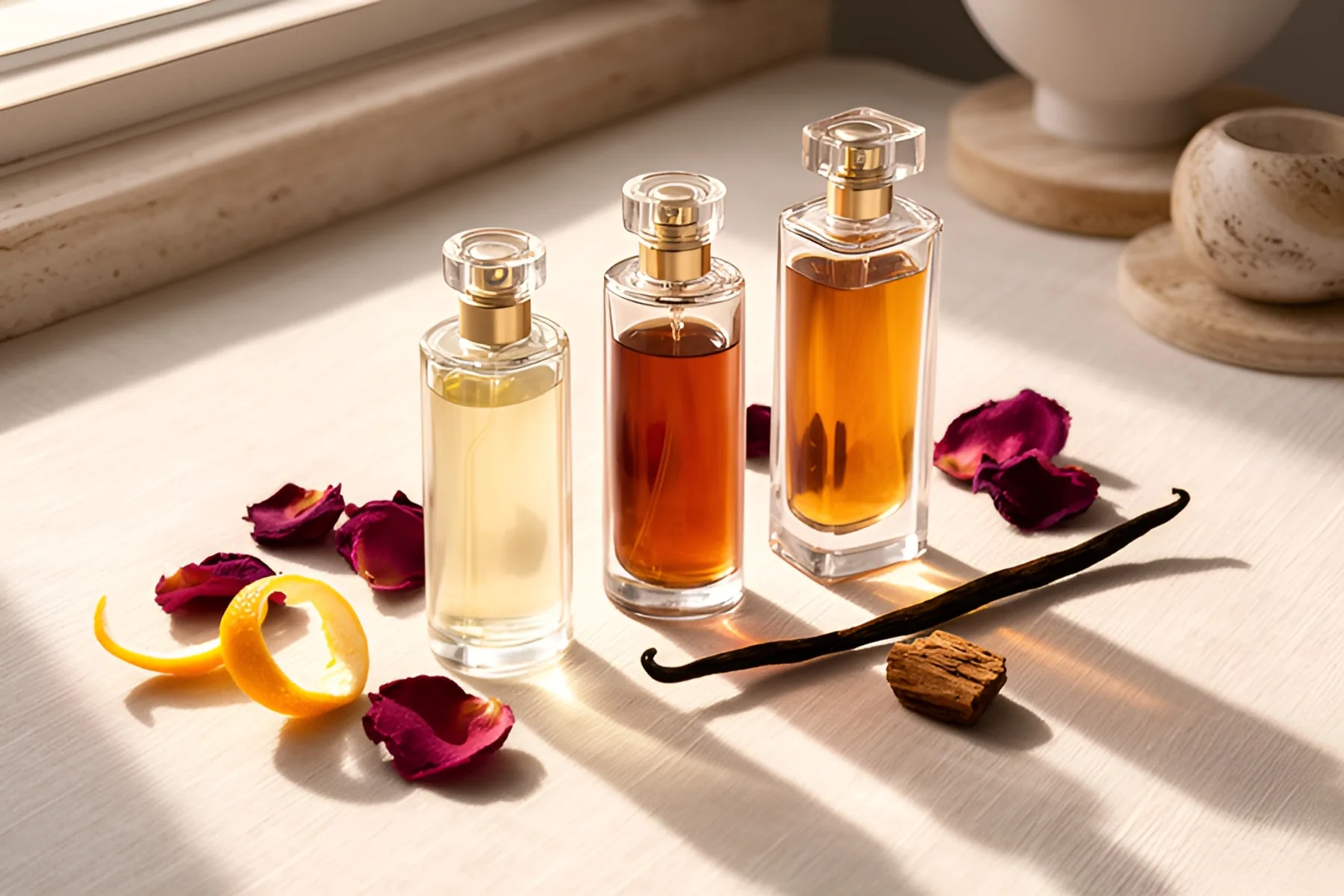
The same scent can come in three or four versions at very different prices: parfum, eau de parfum, eau de toilette and sometimes cologne. The words suggest a clear ladder of strength. In practice the ladder is fuzzier, and how long a fragrance lasts on you depends on much more than the label.
Here's what the terms mean, why fragrances fade the way they do, and what actually helps a scent last, along with the safety basics.
What the concentration names mean
A fine fragrance is a perfume concentrate, the blend of aromatic materials, diluted in alcohol, sometimes with a little water. The name on the bottle tells you roughly how much concentrate is in the mix.
Le Musée du Parfum, the Paris perfume museum run by the house Fragonard, gives these benchmarks [1]:
| Name | Typical perfume concentrate | What to expect |
|---|---|---|
| Parfum / extrait | 20–24% | Richest; usually applied in dabs or small sprays |
| Eau de parfum (EDP) | About 15% | The most common modern format |
| Eau de toilette (EDT) | About 10% | Lighter, often brighter |
| Eau de cologne (EDC) | About 5% | Brief and fresh |
Body mists and hair perfumes usually sit below these, and many are designed to be reapplied through the day.
Why the labels overlap
You'll find other charts with wider ranges, and that's the point: these are industry conventions, not legal definitions. In the US, perfume is regulated as a cosmetic when it's used to make a person more attractive. The FDA's guidance on fragrances doesn't set a percentage for any of these names [2]. Two brands can use the same word for quite different strengths, and an EDT from one house can wear stronger than an EDP from another.
Flankers complicate things further. An "intense" or "parfum" version of a famous scent is often reworked, with different notes and not just more concentrate. Read the note list before assuming it's the same fragrance turned up.
Tip: Compare price per milliliter, not per bottle. A 50 ml EDP and a 100 ml EDT of the same scent can work out similar per wear if you need fewer sprays of the EDP. Our fragrance value scores use price per milliliter; see how we score.
Why fragrances fade: the note pyramid
Perfumers describe a fragrance in three layers:
- Top notes: the first impression, often citrus, light fruits and fresh herbs. They're made of the smallest, most volatile molecules and fade fastest.
- Heart (middle) notes: florals, spices and greener materials that emerge as the top notes lift.
- Base notes: woods, musks, vanilla, amber and resins. These are larger, less volatile molecules that linger for hours.
That structure reflects measurable chemistry. In a Firmenich study, researchers captured the vapors rising from perfume applied to the inner forearm and tracked 11 fragrance ingredients over time. Each ingredient diffused from the skin at a different rate [5]. The same study found that ingredients evaporated more slowly when applied from a soap base than from an alcohol solution [5]. The product base changes how a scent behaves, not just the formula.
This is why a bright citrus EDP can disappear faster than a woody EDT. Longevity is mostly about what's in the bottle, with concentration as a secondary dial.
Why it lasts differently on you
People really do wear the same fragrance differently. The Firmenich researchers also measured sebum, hydration and pH on the face, neck and forearms of 80 people. They found enough variation to sort panelists into distinct skin-type groups [5]. Sebum, skin moisture and temperature all plausibly change how fast fragrance materials evaporate.
What that means for you:
- Test on your own skin, not paper. A blotter shows the composition; skin shows how it wears on you.
- Give it time. Judge a fragrance after a few hours, once the base has emerged, not in the first two minutes.
- Expect seasons to matter. Heat speeds evaporation and boosts projection; cold, dry air tends to mute a scent.
How to make a fragrance last longer
Much of the advice you'll hear rests on perfumers' experience rather than controlled studies, so we've separated what's well grounded from what's plausible.
Well grounded:
- Choose for longevity. Fragrances built around woods, musks, ambers and resins outlast citrus colognes. That follows from evaporation chemistry [5].
- Pick a stronger format of the same scent when one exists, keeping in mind that flankers may differ.
- Apply to clean skin after bathing, so the scent isn't competing with other fragrances or sweat.
Plausible, lightly evidenced:
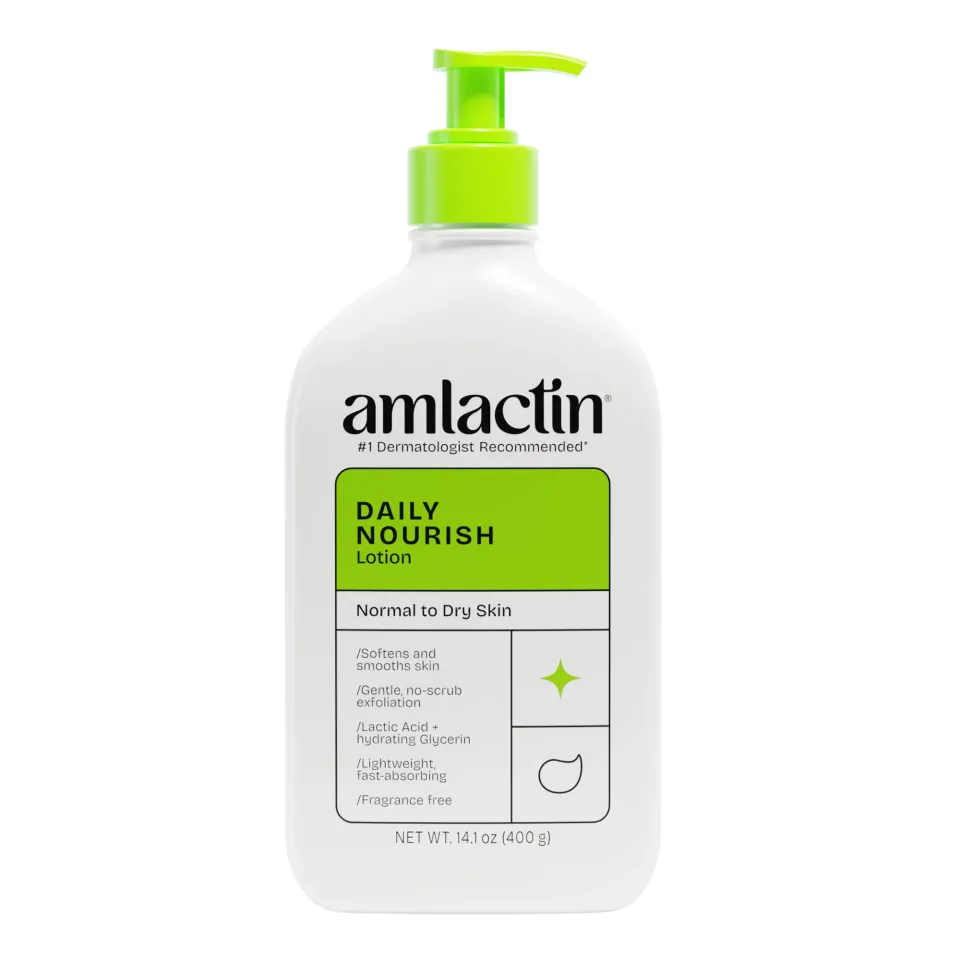
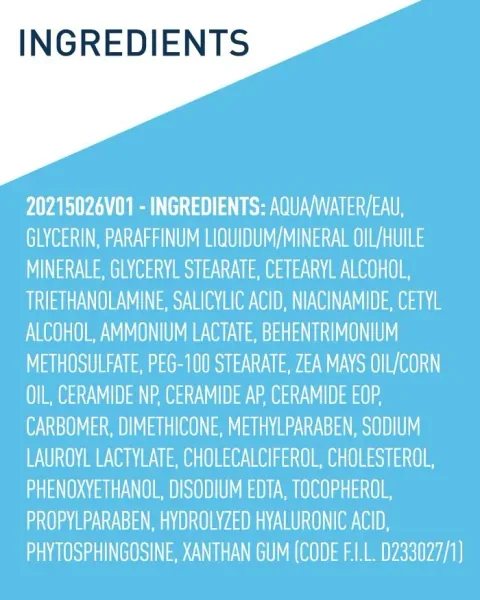
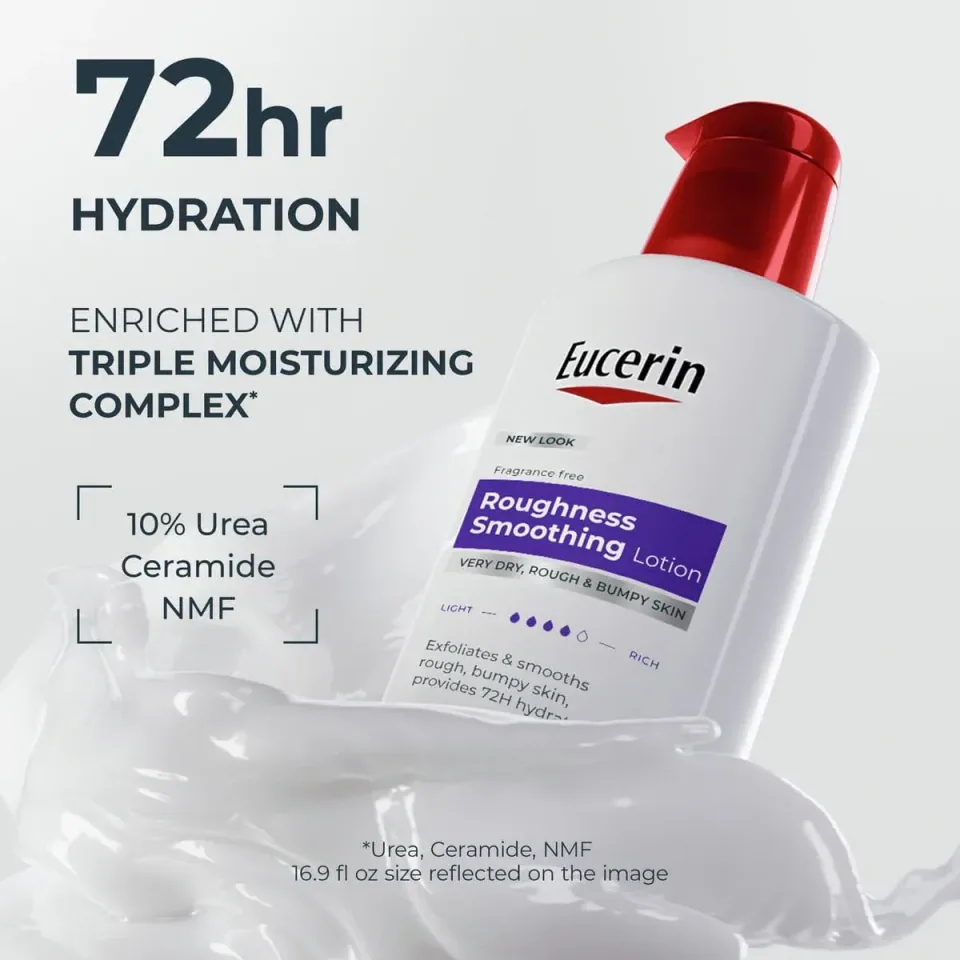
- Moisturize first, with something unscented. Many wearers find scent lasts longer on moisturized skin, and the Firmenich work shows the base you apply into affects evaporation [5]. We couldn't find a robust human trial quantifying the effect, so treat any specific "hours longer" claim with skepticism.
- Spray fabric or hair. Fibers hold scent well. Test fabric in an inconspicuous spot first, since oils and dyes in some fragrances can mark delicate materials.
- Layer a matching body product if the line includes one. It's a cheaper way to build a base layer.
Probably not worth worrying about: Rubbing your wrists together is often blamed for "crushing" top notes. There's little evidence either way. Dabbing rather than rubbing simply leaves the fragrance where you put it.
Storage
Perfumers commonly advise keeping bottles capped, upright, cool and away from sunlight. A bathroom windowsill is about the worst spot because of heat, humidity and light. The original box is good storage. A scent that has turned sharp, sour or noticeably darker has likely degraded.
Safety: what's regulated and what isn't
Labeling
US cosmetic labels can list the whole fragrance blend simply as "Fragrance," because the formula is treated as a trade secret [2]. The FDA also notes that "unscented" products may still contain fragrance ingredients used to mask odors [2]. The Modernization of Cosmetics Regulation Act of 2022 (MoCRA) requires the FDA to issue rules on fragrance allergen labeling, which would bring US labels closer to what EU shoppers already see [3]. In the EU, DermNet notes, 26 fragrance allergens must be named on labels [6].
Fragrance ingredients must be safe under labeled or customary use, but cosmetics don't need FDA approval before sale [2]. If a fragrance makes a therapeutic claim, such as relieving headaches, the FDA can treat it as a drug [2].
The industry's own standards
The industry's main self-regulatory framework is the IFRA Standards, which the International Fragrance Association calls a globally recognized risk management system for the safe use of fragrance ingredients [4]. The standards are updated through numbered amendments; IFRA planned to present its 52nd Amendment in late October 2026 [4]. They're voluntary industry rules rather than law, so they complement government regulation rather than replacing it.
Fragrance allergy
Fragrance is one of the most common causes of allergic contact dermatitis. DermNet puts it second only to nickel. About 1% of adults and 1.8% of children and adolescents are affected, and roughly 10% of patients who undergo patch testing have a fragrance allergy [6]. The reaction is delayed, so a rash can appear hours to days after contact, which makes the culprit easy to miss [6].
Before you commit to a new scent:
- Do a use test. The AAD suggests applying a new leave-on product to a quarter-sized spot on the underside of your arm or the bend of your elbow twice a day for seven to 10 days. If you don't react, it's reasonable to go ahead [7]. DermNet describes a similar two-week repeat open application test [6].
- Spray clothes rather than skin if you've had reactions before, and avoid broken or freshly shaved skin.
- Don't rely on "natural." DermNet warns that "botanical," "herbal" or "natural" ingredients may hide unidentified fragrance [6]. Essential oils are fragrance ingredients too.
Watch out: An itchy rash on the neck, wrists or face that keeps returning can be fragrance allergy. A board-certified dermatologist can patch test you to identify the specific ingredient, which is far more useful than avoiding all scents [6].
Choosing your next fragrance
- Start with a sample or decant and wear it for a full day.
- Match the format to how you'll wear it. An EDT or body mist suits the office and warm weather. An EDP or parfum suits evenings and cold months.
- Read the notes for longevity clues. Heavier bases usually mean more staying power.
- Check the value math per milliliter and per wear.
Browse scored options in fragrance and body mists, and see body care for fragrance-free moisturizers to wear underneath.
Bottom line: Concentration names are a rough guide, not a guarantee. Longevity comes mainly from the formula and your skin, so test on yourself, moisturize with something unscented, store bottles cool and dark, and patch-test anything new.
Good questions.
Does eau de parfum always last longer than eau de toilette?
Usually, within the same scent, because an EDP version generally carries more perfume oil. Across different scents and brands, not necessarily. The names aren't standardized, and a toilette built on long-lasting woody or musky materials can outlast a parfum built on fresh citrus. Some 'flankers' also change the formula, not just the strength, so compare the note lists too.
Why can't I smell my own perfume after an hour?
Often it's still there. Noses adapt to constant smells, so you stop noticing a scent you've worn for a while even when people near you can still smell it. Before you reapply, ask someone you trust or smell a sprayed scarf you haven't been wearing. Over-spraying because of nose blindness is a common cause of overpowering fragrance.
Is it safe to spray perfume on my hair?
Hair holds scent well, but many fine fragrances are high in alcohol, which can be drying with frequent use. Hair perfumes and hair mists are made for that purpose and are usually lighter. Spray from a distance onto the lengths rather than the scalp, and skip it if you have scalp irritation.
How do I know if I'm allergic to a perfume?
Allergic contact dermatitis usually shows up as an itchy, red or bumpy rash where the product touched the skin, appearing hours to days after use. To screen a new leave-on product, the AAD suggests applying it to a quarter-sized spot on the inner arm twice a day for seven to 10 days. If you keep reacting to scented products, a dermatologist can do formal patch testing to identify the specific ingredient.
References
The research behind this guide — open any source to read the original.
- [1]Eau de toilette, parfum, eau de parfum — Le Musée du Parfum, Fragonard (Paris)
- [2]Fragrances in Cosmetics — U.S. Food and Drug Administration
- [3]Modernization of Cosmetics Regulation Act of 2022 (MoCRA) — U.S. Food and Drug Administration
- [4]Safe use and fragrance science — International Fragrance Association (IFRA)
- [5]Headspace analysis study of evaporation rate of perfume ingredients applied onto skin — International Journal of Cosmetic Science (1995), via PubMed
- [6]Fragrance allergy — DermNet
- [7]How to test skin care products — American Academy of Dermatology
Educational content, not medical advice. Patch-test anything new, and see a dermatologist for persistent skin or scalp concerns. Our editorial standards
Discussion
What do you think?
No discussions yet.
Tried this article? Ask a question or share how it’s working for your skin or hair — you’ll be the first.