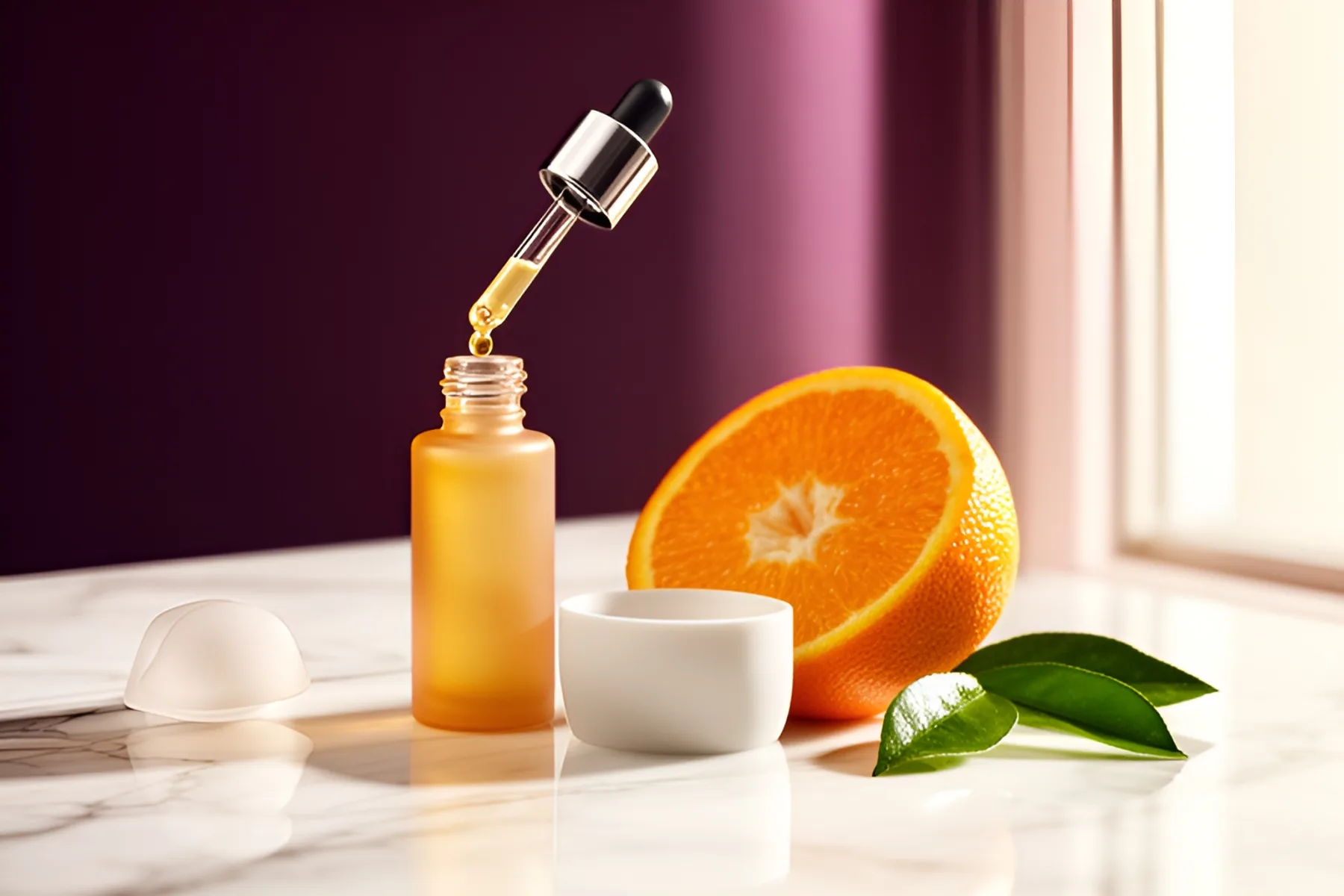
Vitamin C is one of the most popular serum ingredients, and one of the trickiest to get right. The same molecule that makes it effective also makes it fragile. Whether a serum does anything depends on the form of vitamin C, its strength, its pH and how well the bottle protects it. Here's what the research says and how to shop.
What vitamin C does in skin
Vitamin C is the main water-soluble antioxidant in skin. According to the Linus Pauling Institute at Oregon State University, it helps limit damage from free radicals generated by UV exposure, and it's needed to build and stabilize collagen [1]. A 2017 review summarizes the claimed roles: antioxidant protection, support for collagen, reduced melanin formation, and regenerating vitamin E [3].
The same review adds an important caveat: clinical studies of topical vitamin C remain limited, and the challenge is finding a formula that's both stable and able to get into skin [3].
The forms on the label
| Form (INCI name) | Stability | Evidence | Notes |
|---|---|---|---|
| L-ascorbic acid (ascorbic acid) | Low | Most studied | Needs a low pH to penetrate; can sting [2] |
| Magnesium ascorbyl phosphate | Higher | Limited | Didn't raise skin vitamin C levels in absorption testing [2] |
| Sodium ascorbyl phosphate | Higher | Limited | Linus Pauling Institute notes it may be poorly absorbed [1] |
| Ascorbyl palmitate | Higher, oil-soluble | Limited | Limited absorption [1][2] |
| Other derivatives (ethyl ascorbic acid, tetrahexyldecyl ascorbate, ascorbyl glucoside) | Higher | Mostly early or industry data | Often chosen for gentler, more stable formulas |
The pattern is consistent: the derivatives were invented to solve vitamin C's stability problem, but the best human evidence still belongs to plain L-ascorbic acid.
Strength and pH: the numbers that matter
Much of what we know about getting vitamin C into skin comes from a 2001 study led by Sheldon Pinnell at Duke University, using pig skin. It found that [2]:
- pH: L-ascorbic acid had to be formulated below about pH 3.5 to enter the skin.
- Strength: absorption peaked at 20%; higher concentrations didn't help.
- Reservoir: skin levels saturated after three daily applications, and the vitamin C stayed in skin with a half-life of about four days.
- Derivatives: magnesium ascorbyl phosphate, ascorbyl palmitate and dehydroascorbic acid didn't raise skin levels of L-ascorbic acid.
The Linus Pauling Institute summarizes it the same way: formulas below pH 4 aid absorption, and maximal absorption was seen with a 20% solution [1]. It also notes that human studies of 0.6% to 10% vitamin C or its derivatives haven't reported adverse effects [1].
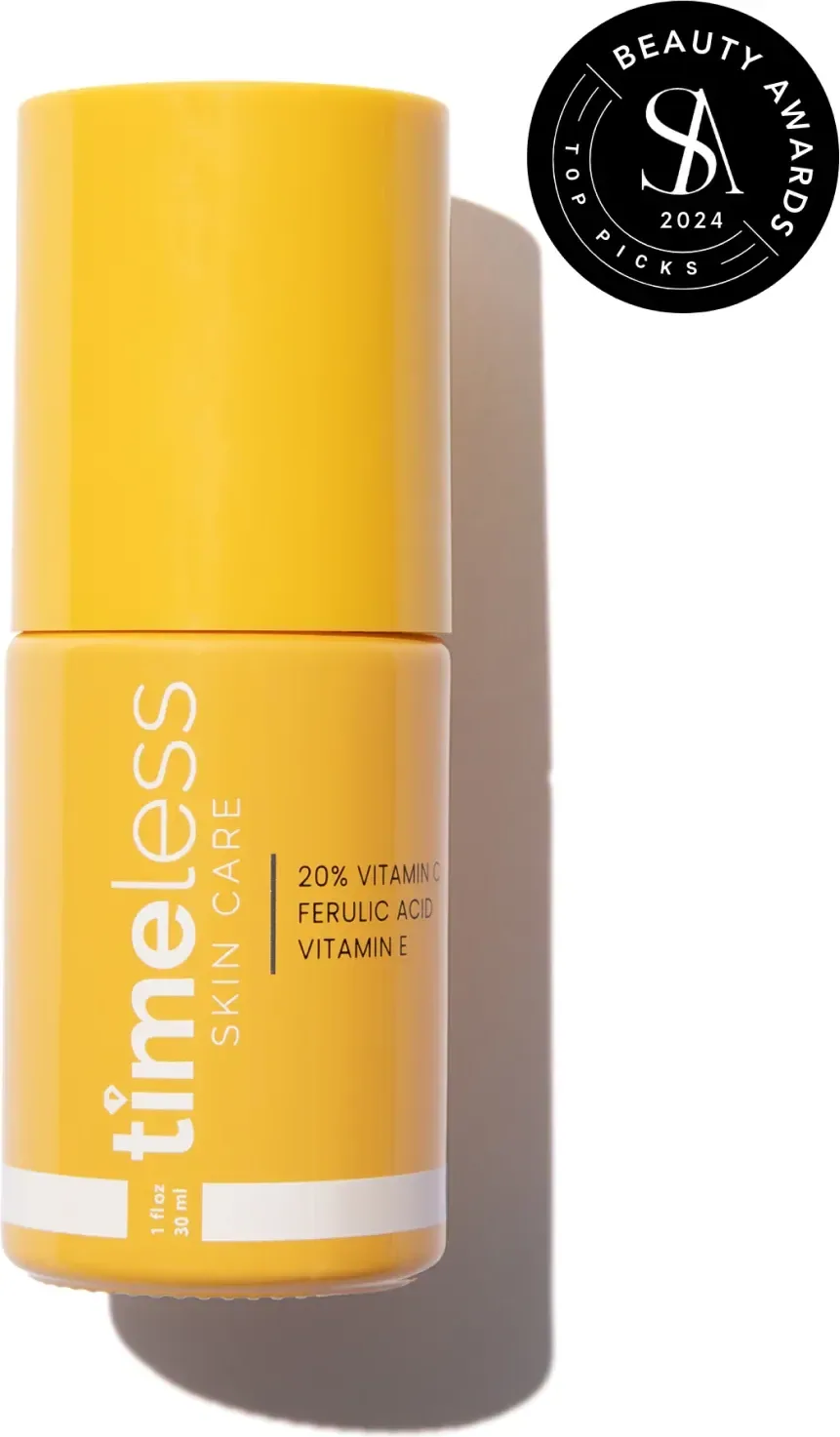
Tip: More isn't better past 20%. A 15% L-ascorbic acid serum at a low pH, in good packaging, is a sensible benchmark. If that stings, try 10% or a derivative.
Why vitamin C serums pair it with vitamin E and ferulic acid
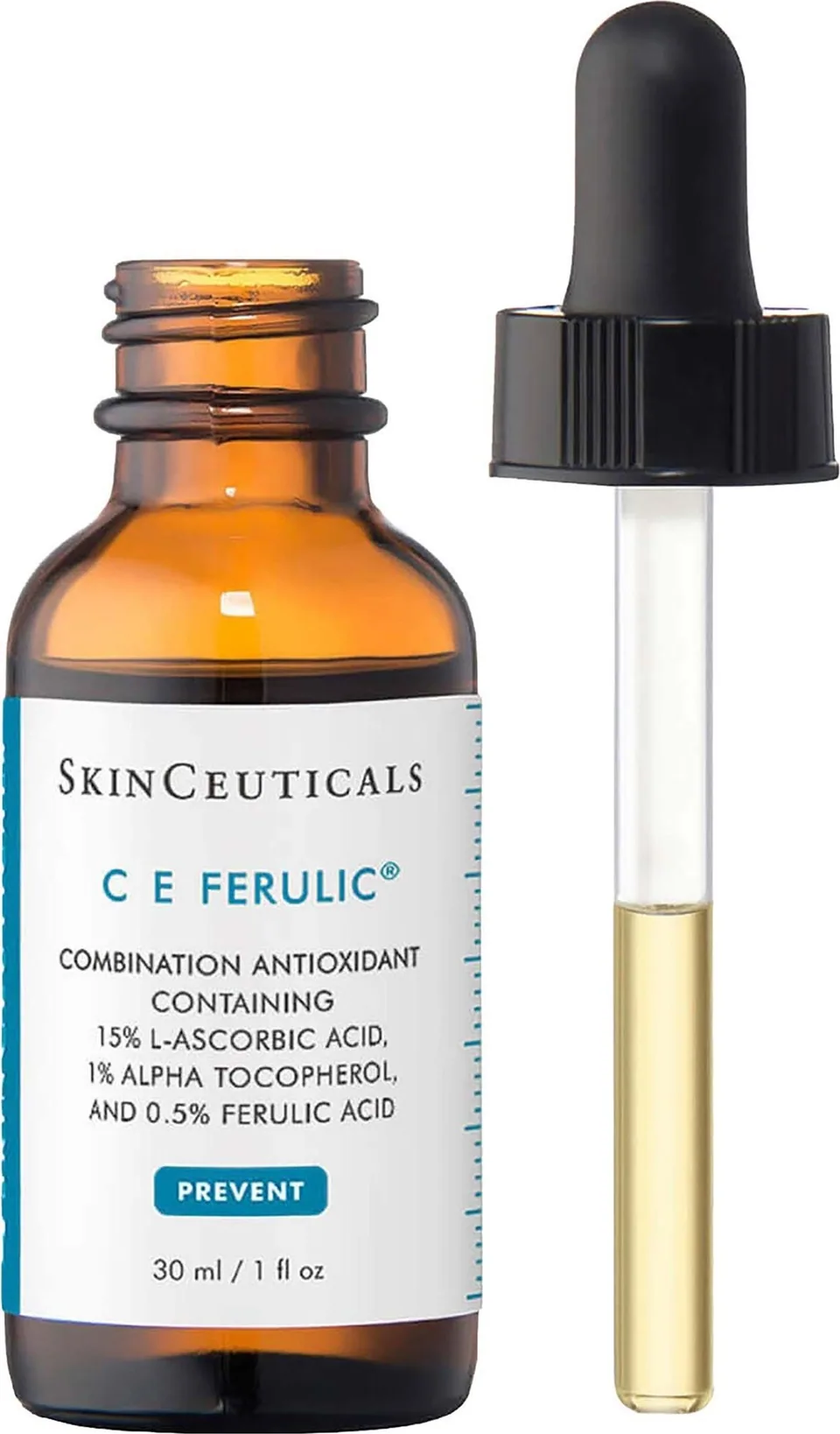
The best-known formula trick also came out of Pinnell's lab. In a 2005 study, adding ferulic acid, a plant antioxidant, to a solution of 15% L-ascorbic acid and 1% vitamin E improved the chemical stability of the vitamins. It also roughly doubled the solution's protection against solar-simulated UV, from about 4-fold to about 8-fold, measured by redness and sunburn cells [4].
Two things to keep in mind. First, that was one specific formula tested in a laboratory setting, not a trial of the many serums that now copy the combination. Second, "photoprotection" here means extra defense against UV damage beneath a layer of other protection; it isn't an SPF, and vitamin C serums are not sunscreens.
The Linus Pauling Institute also notes that combinations of topical vitamins C and E prevent photodamage more effectively than either alone [1].
What results look like in people
The human trials are encouraging but small.
| Study | Who | What | Result |
|---|---|---|---|
| Traikovich, 1999 [6] | 19 adults, 36–72, mild to moderate photodamage | Topical ascorbic acid serum on half the face, daily for 3 months | Significant improvement in fine wrinkling, roughness, laxity and sallowness vs. vehicle |
| Humbert, 2003 [5] | Women with photoaged skin on neck and arms | 5% vitamin C cream vs. vehicle, daily for 6 months | Improved global score, skin microrelief and deep furrows; well tolerated |
| Linus Pauling Institute summary [1] | Several trials | 3%–10% vitamin C for at least 12 weeks | Reduced wrinkling and roughness, increased collagen production |
These are real effects, but they come from short, small trials, often split-face, sometimes using a single brand's product. The fair expectation is subtle smoothing and brightness after three months of consistent use, not dramatic change.
Dark spots
Vitamin C is one of the ingredients the American Academy of Dermatology lists for fading dark spots, alongside azelaic acid, glycolic acid, kojic acid and retinoids [7]. The AAD is clear about the foundation, though: treatment for dark spots begins with sunscreen, ideally a tinted one with iron oxide for darker skin tones [7]. Without daily sun protection, a vitamin C serum won't keep up.
Choosing a vitamin C serum
- Check the form. "Ascorbic acid" near the top of the ingredient list means L-ascorbic acid. A derivative name means a gentler, less-proven option.
- Look for a stated percentage and, for L-ascorbic acid, a low pH if the brand discloses it.
- Favor good packaging. Opaque, airtight bottles, airless pumps or single-use capsules protect vitamin C from air and light better than clear dropper bottles [1].
- Consider vitamin E and ferulic acid if you want the most-studied stabilizing combination [4].
- Buy a size you'll finish. A smaller bottle used up in a couple of months beats a big one that oxidizes halfway through.
- Judge by price per milliliter. The best-known C+E+ferulic serums are expensive, and several less costly formulas list the same three ingredients at similar strengths. Our serums category compares value per milliliter.
How to use it
- Patch test first. Low-pH vitamin C can sting. The AAD recommends testing new products on a small spot twice daily for seven to 10 days before using them on your face [8].
- Apply in the morning to clean, dry skin, then moisturizer, then sunscreen. A few drops cover the face.
- Expect a tingle, not a burn. Mild, brief tingling is common with low-pH formulas. Burning, redness or itching means stop.
- Pair thoughtfully. Vitamin C fits easily with niacinamide and hyaluronic acid. If you also use a retinoid, keep it at night. See our skincare routine guide for layering.
- Watch the color. If the serum turns dark orange or brown, it has oxidized; replace it.
Watch out: Oxidized vitamin C can leave a temporary yellow-orange tint on skin and fabric. It's harmless, but it's a sign your serum is past its best.
Who might skip it
Vitamin C is optional. If your skin is very sensitive or reactive, low-pH L-ascorbic acid may be more trouble than it's worth; a derivative, or simply a well-made sunscreen and a niacinamide serum, may suit you better. If you have a skin condition such as rosacea or melasma, ask a dermatologist before adding acids or actives.
Bottom line: Choose L-ascorbic acid at 10%–20% in airtight, opaque packaging if your skin tolerates it, or a derivative if it doesn't. Use it in the morning under sunscreen, give it about three months, and replace it once it turns dark. Treat it as a useful extra, not a necessity.
Ingredients in this story
Good questions.
What percentage of vitamin C should I use?
For L-ascorbic acid, 10% to 20% is the usual range. Pig-skin absorption studies found that skin uptake peaked at 20% and didn't improve at higher strengths. If you have sensitive skin, starting nearer 10% is gentler, because higher strengths at low pH are more likely to sting. Derivatives are listed at different percentages and can't be compared one-to-one.
Is a vitamin C derivative as good as L-ascorbic acid?
Derivatives such as magnesium ascorbyl phosphate, sodium ascorbyl phosphate and ascorbyl palmitate are more stable, but they have less evidence. In one absorption study, those derivatives did not raise vitamin C levels in skin the way L-ascorbic acid did. Some newer derivatives have promising data, but most of it is early. They can be a reasonable choice if pure vitamin C irritates you.
Why did my vitamin C serum turn orange?
L-ascorbic acid oxidizes when it's exposed to air, light and heat, and the serum darkens as it breaks down. A pale straw color is common; a dark orange or brown serum has lost much of its active and should be replaced. Buy smaller bottles in opaque, airtight packaging, close them right after use and store them away from heat.
Should I use vitamin C in the morning or at night?
Most people use it in the morning, under sunscreen, because its main job is antioxidant support against daytime UV and pollution. Using it at night is fine too if that's easier, or if it conflicts with other morning products. It doesn't replace sunscreen in either case.
References
The research behind this guide — open any source to read the original.
- [1]Vitamin C and Skin Health — Linus Pauling Institute, Oregon State University
- [2]Topical L-ascorbic acid: percutaneous absorption studies — Dermatologic Surgery (2001), via PubMed
- [3]Topical Vitamin C and the Skin: Mechanisms of Action and Clinical Applications — Journal of Clinical and Aesthetic Dermatology (2017), via PubMed
- [4]Ferulic acid stabilizes a solution of vitamins C and E and doubles its photoprotection of skin — Journal of Investigative Dermatology (2005), via PubMed
- [5]Topical ascorbic acid on photoaged skin. Clinical, topographical and ultrastructural evaluation: double-blind study vs. placebo — Experimental Dermatology (2003), via PubMed
- [6]Use of topical ascorbic acid and its effects on photodamaged skin topography — Archives of Otolaryngology–Head & Neck Surgery (1999), via PubMed
- [7]How to fade dark spots in darker skin tones — American Academy of Dermatology
- [8]How to test skin care products — American Academy of Dermatology
Educational content, not medical advice. Patch-test anything new, and see a dermatologist for persistent skin or scalp concerns. Our editorial standards
Discussion
What do you think?
No discussions yet.
Tried this article? Ask a question or share how it’s working for your skin or hair — you’ll be the first.