Splurge
Drunk Elephant
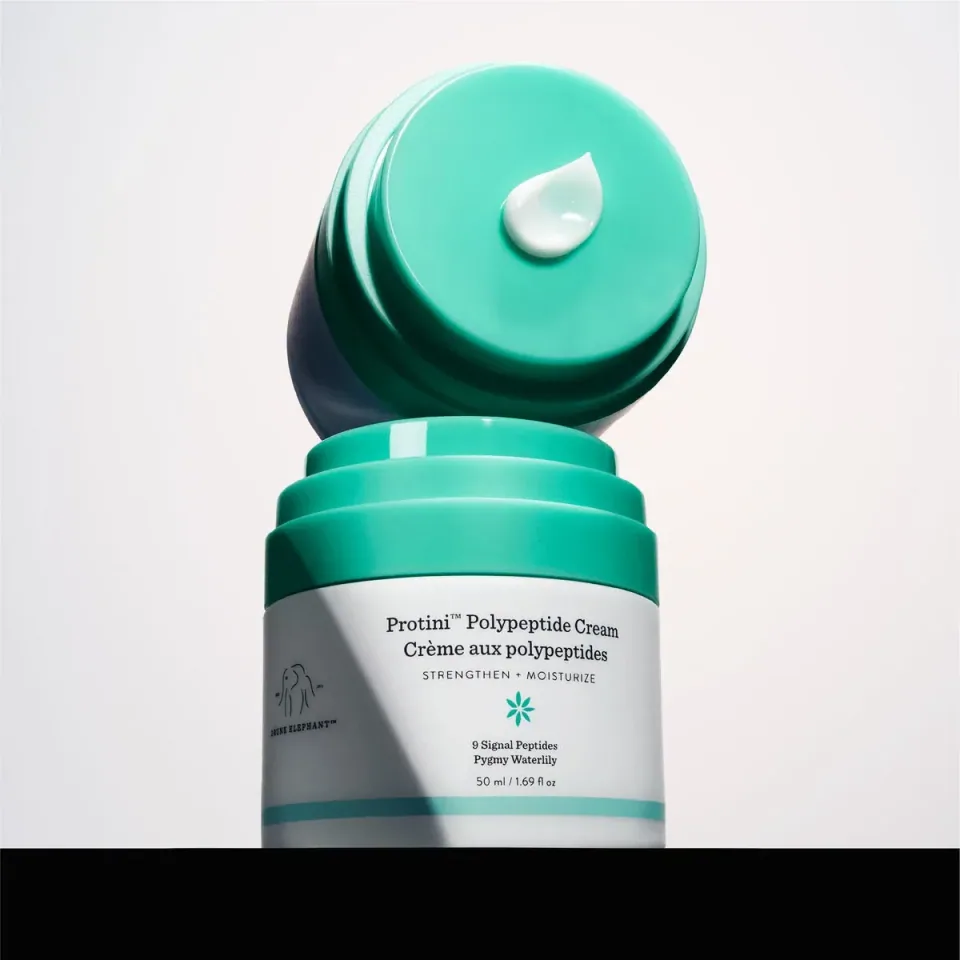
Protini Polypeptide Firming Refillable Moisturizer
7.3Good
A fragrance-free peptide gel-cream with nine signal peptides and amino acids, pleasant to use but hard to justify on price alone.
Gel-cream5$72.00
Barrier & repair· in 1 product
Also listed as Copper tripeptide-1, GHK-Cu and Glycyl-L-histidyl-L-lysine copper
Copper peptides are the naturally occurring tripeptide GHK bound to copper. They are used in serums marketed for firmness, texture and recovery of the skin surface.
What it does
GHK-Cu is a carrier peptide: it delivers copper, a cofactor for enzymes involved in collagen and elastin formation. Lab and wound-healing studies show it can influence collagen synthesis, antioxidant activity and tissue remodeling, and a handful of small facial studies report improvements in fine lines and skin density. Cosmetic serums use much lower amounts than many of those experiments.
Emerging evidence
Mechanistic and animal data are substantial, but human cosmetic trials are few, small and often decades old or sponsored by suppliers.
In our directory: It’s a key ingredient in 1 product we review, most often moisturizers. Those products are mostly built for firming, fine lines and smoothing. In formulas, it most often shares the label with peptides, glycerin and hyaluronic acid.
Reach for it for
Usually a good fit for
How to use it
Apply a thin layer once daily after cleansing, then moisturizer. Many people use copper peptides on nights they do not use a retinoid or acid.
Layering
Pairs well with
Go slow with
Not forbidden — just easier to over-do. Alternate nights or separate morning and evening.
Before you start
Generally well tolerated, though some users report irritation or breakouts. Pure L-ascorbic acid and strong acids can destabilize copper complexes, so alternate rather than layer them; layering with retinoids may add irritation.
References
Educational, not medical advice. Ingredient guides summarise published research and expert guidance; formulas and concentrations differ between products.
1 product
1 product
Drunk Elephant
A fragrance-free peptide gel-cream with nine signal peptides and amino acids, pleasant to use but hard to justify on price alone.
More barrier & repair