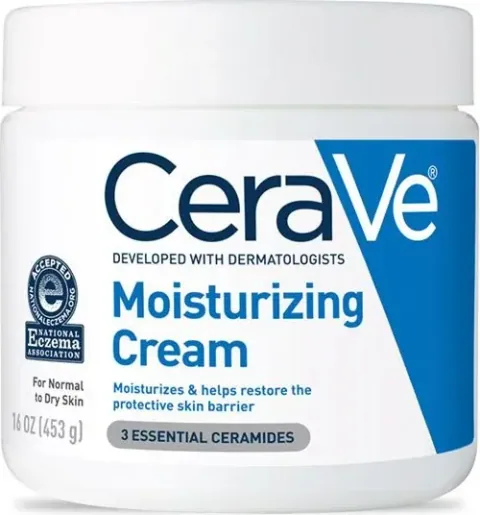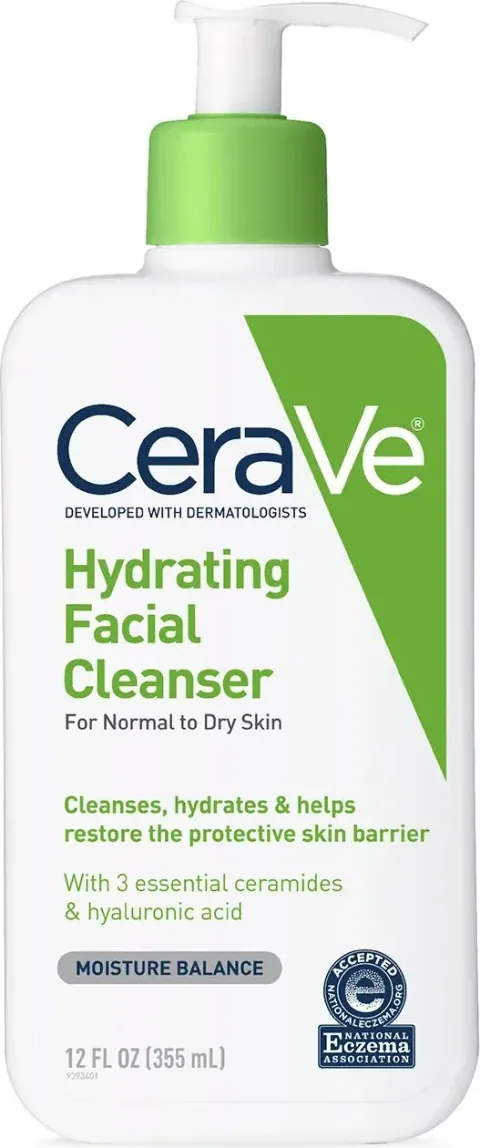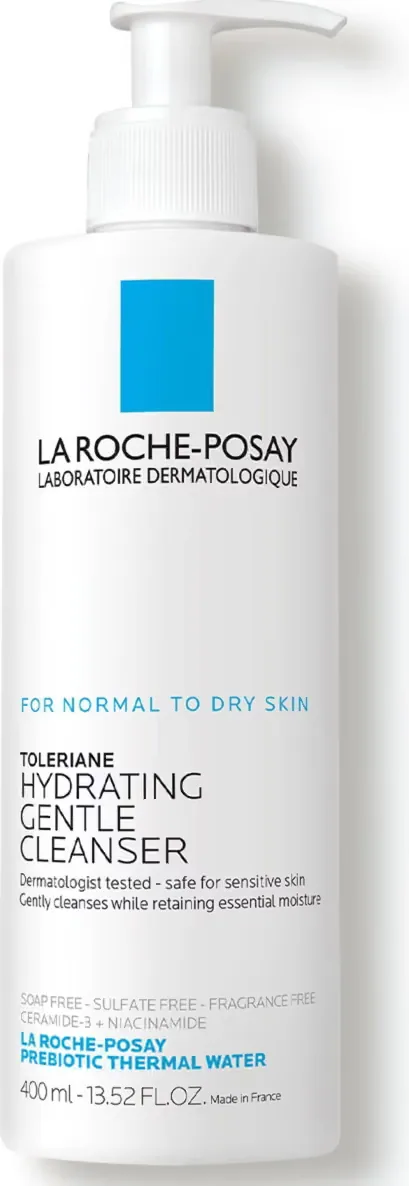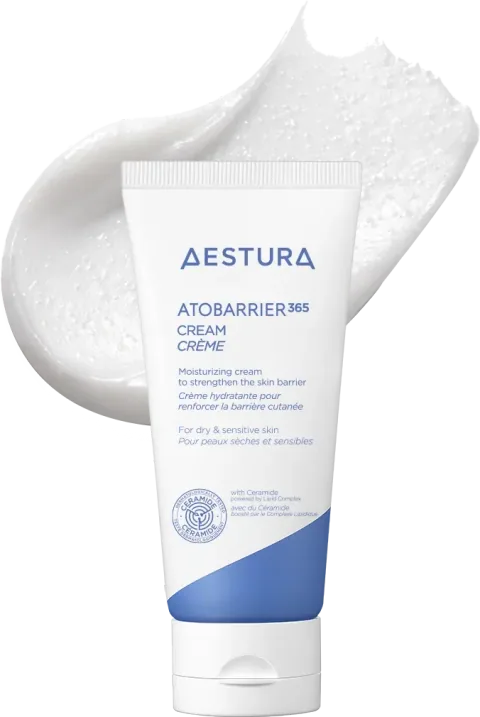
"My skin barrier is damaged" has become one of the most common phrases in skincare forums. Sometimes it's an accurate description of over-exfoliated, angry skin. Sometimes it's eczema, rosacea or an allergy wearing a trendy label. Either way, the fix is rarely a new ten-step routine.
Here's what the barrier actually is, what tends to break it, which ingredients have the strongest support and how to build a short routine that gives skin room to recover.
What the "skin barrier" actually means
When dermatologists talk about the barrier, they usually mean the stratum corneum, the thin outermost layer of the skin. It's often described with a bricks-and-mortar model: flattened, dead skin cells (the bricks) are held together by layers of lipids (the mortar), mainly ceramides, cholesterol and free fatty acids [2]. Ceramides alone make up about half of those lipids by weight [2].
Inside the cells sits a mix of water-attracting molecules called natural moisturizing factor, which includes amino acids, lactic acid and pyrrolidone carboxylic acid (PCA) [2]. Together, the lipids and natural moisturizing factor do two jobs: they slow the evaporation of water from deeper layers, known as transepidermal water loss, and they limit how easily irritants and allergens get in.
When the mortar is disrupted, water escapes faster, the surface gets rough and flaky, and products that used to feel fine start to sting.
Signs your barrier is stressed
There's no single test you can do at home, but these patterns are common:
- Tightness shortly after cleansing, even with a moisturizer on
- Stinging or burning when you apply products that never bothered you before, including plain moisturizer
- Flaking, rough patches or a "shiny but dry" look on the cheeks
- New redness, or small bumps that aren't typical breakouts
- Makeup clinging to dry patches
Watch out: Persistent itching, oozing, cracks that bleed, a rash that spreads, or swelling around the eyes are not just "barrier damage." The AAD advises seeing a dermatologist when dry skin doesn't improve with self-care [1]. Allergic contact dermatitis, eczema, rosacea and fungal infections can all look similar and need a proper diagnosis.
What commonly damages the barrier
| Cause | Why it matters | What to do instead |
|---|---|---|
| Over-exfoliating | Acids, scrubs and brushes remove surface cells; overdoing it leaves skin red and irritated [6] | Exfoliate less often and never on sunburned or broken skin [6] |
| Stacking actives | Retinoids and benzoyl peroxide already make skin peel; adding exfoliation can worsen dryness [6] | Introduce one active at a time |
| Harsh or excessive cleansing | Thick lather and deodorant soaps strip lipids [1] | Use a gentle cleanser, only as much as you need [1] |
| Long, hot showers | The AAD recommends five to ten minutes in warm water [1] | Keep it short; pat dry |
| Fragrance and drying alcohols | Common irritants for dry, sensitive skin [1] | Choose "fragrance-free," not "unscented" [1] |
| Low humidity, cold and wind | Pulls water from the skin | Use a humidifier and richer textures in winter [1] |
The first two rows explain a lot of the barrier talk on social media. A routine with a glycolic toner, a retinol serum and a vitamin C serum can be too much for many people, even when each product is well made. Our guide to chemical exfoliants covers how to use acids without overdoing it.
The three jobs of a good moisturizer
Moisturizers are usually described by what their ingredients do [2][4][5]:
| Type | What it does | Examples |
|---|---|---|
| Humectants | Draw water into the outer layer | Glycerin, hyaluronic acid, urea, panthenol, lactic acid [2] |
| Emollients | Fill gaps between skin cells so the surface feels smoother and softer | Plant oils, squalane, fatty alcohols, esters [2] |
| Occlusives | Form a water-repellent layer that slows water loss | Petrolatum, mineral oil, dimethicone, lanolin [2] |
The combination matters. Humectants on their own can pull water from deeper skin layers that then evaporates, which is why they work best paired with an occlusive [2]. That's also why a hyaluronic acid serum under no moisturizer can leave skin feeling tighter, not plumper.
The AAD's list of ingredients to look for in a cream or ointment for dry skin reads like a practical shopping list: jojoba oil, dimethicone, glycerin, hyaluronic acid, lactic acid, lanolin, mineral oil, petrolatum and shea butter [1]. It also notes that ointments and creams add more moisture than lotions [1].
What the evidence says about key barrier ingredients
Petrolatum
Petrolatum, the main ingredient in petroleum jelly, is the most effective classic occlusive. One review notes that at a concentration of at least 5% it can reduce transepidermal water loss by more than 98% [2].
A long-standing worry was that heavy occlusion might stop the skin from rebuilding itself. A 1992 study in human volunteers tested that directly: after the barrier was disrupted with acetone, sites treated with petroleum jelly recovered faster, not slower, and the petrolatum was found spread between the cell layers rather than sitting on top as an impermeable film [3]. The downside is texture: it's greasy, which is why many people use it as a thin final step at night or only on dry patches.
Ceramides, cholesterol and fatty acids
Because these lipids are the skin's own mortar, replacing them makes intuitive sense. Research summarized in a 2017 review found that topical mixtures of ceramides, cholesterol and free fatty acids in specific proportions (a 3:1:1 molar ratio in the work cited) can speed barrier repair after disruption [2]. The same review adds an important caveat: simple petroleum-based emollients are nearly as effective as products containing skin-identical lipids for many people [2].
In other words, ceramide creams are a sensible choice, especially if you dislike the feel of heavy ointments, but you don't need a premium "barrier" product to see results.
Niacinamide
Niacinamide has been shown to increase the skin's production of ceramides and other barrier lipids, and studies have found that twice-daily use can reduce transepidermal water loss [2]. It's well tolerated by most people at low-to-moderate strengths. Our niacinamide explainer covers its limits.
Glycerin, urea and lactic acid
These humectants support water content in the outer layer. Urea at 10% has been shown to reduce transepidermal water loss in people with atopic skin, and glycerin works synergistically with occlusives [2]. Lactic acid also moisturizes, but at higher strengths it exfoliates, so a rough, irritated face is not the time for a strong lactic acid toner.
Oils: not all the same
Plant oils vary widely. Oils high in linoleic acid relative to oleic acid, such as sunflower seed and safflower oil, are associated with better barrier effects, while olive oil, which is relatively low in linoleic acid, has been shown to disrupt the barrier [2]. If you love a face oil, look for one built on high-linoleic oils and use it over a water-based moisturizer.
A simple barrier reset routine
This isn't medical treatment. It's a pared-back routine that removes common triggers and supports the skin while it recovers. Give it at least two weeks before judging.
Morning
- Rinse with lukewarm water, or use a small amount of a gentle, fragrance-free cleanser if you're oily.
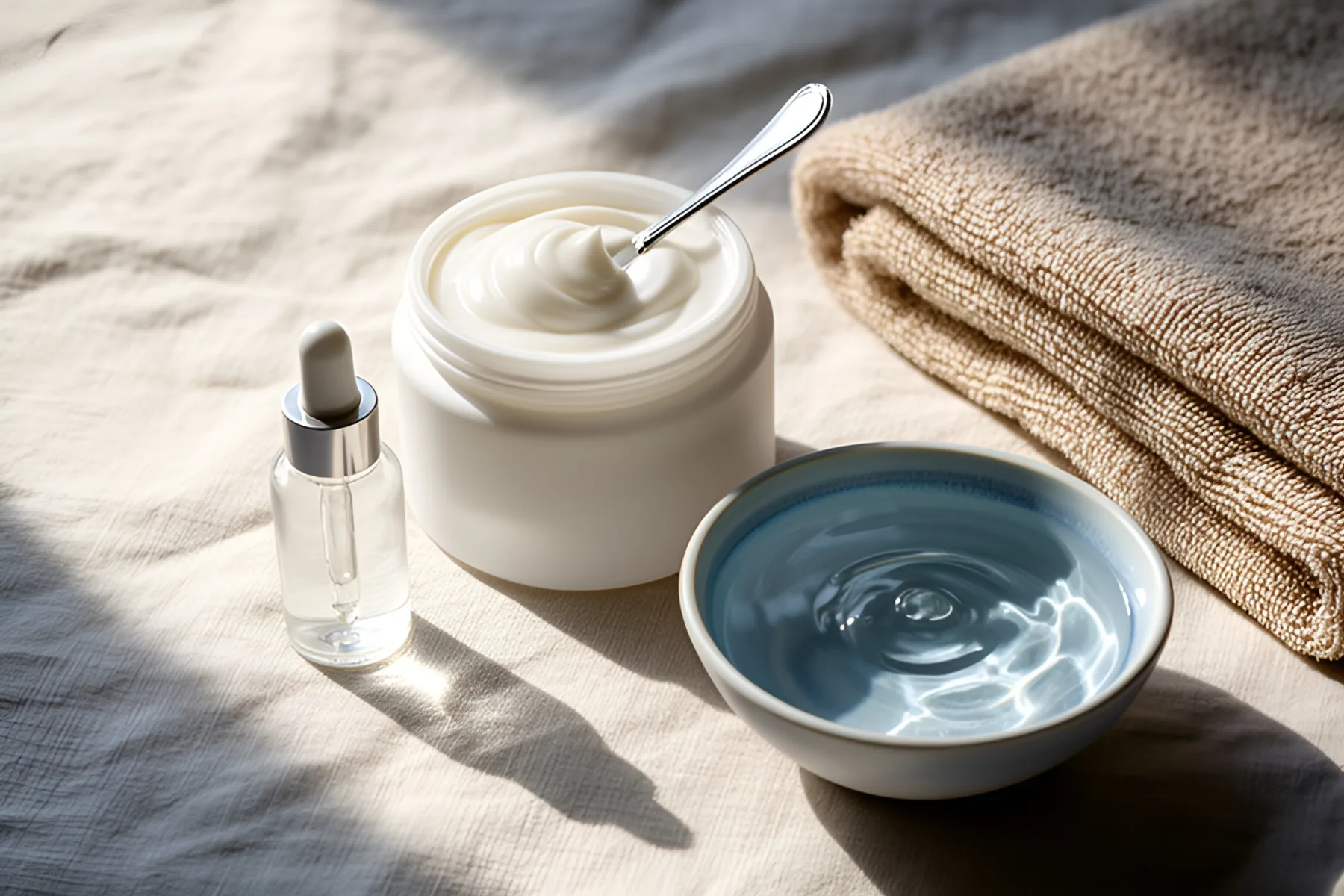
- Apply a fragrance-free moisturizer with humectants plus emollients or occlusives.
- Apply a broad-spectrum sunscreen, SPF 30 or higher, as the AAD recommends for people with dry skin [1]. Mineral filters are often better tolerated by stinging skin. See how to choose a sunscreen.
Evening
- Cleanse gently; use a cleansing balm or oil first only if you're removing long-wear makeup or water-resistant sunscreen.
- Apply moisturizer while skin is still slightly damp. The AAD recommends applying moisturizer right after washing, when skin is damp, to trap water [1].
- Optional: a thin layer of petrolatum or a balm over the driest areas.
Pause for now: exfoliating acids, scrubs, cleansing brushes, retinoids, high-strength vitamin C, fragranced products and products with drying alcohols [1][6].
Tip: When you're ready to add actives back, reintroduce one at a time and patch test first. The AAD suggests applying a new product to a quarter-sized area, such as the inside of the elbow, twice a day for seven to ten days before using it more widely [7].
Reading "barrier" labels with a skeptic's eye
"Barrier repair," "skin-identical" and "microbiome-friendly" are marketing terms, not regulated claims. The FDA notes that it doesn't define "hypoallergenic," and that "natural" or "organic" sourcing says nothing about how safe a product is [8].
What to check instead:
- Fragrance-free on the label, rather than "unscented" [1]
- A short ingredient list if you react easily, which makes it easier to identify a trigger
- Humectants near the top (glycerin is inexpensive and effective) plus emollients or occlusives
- Packaging that suits the formula: tubes or pumps for creams with sensitive ingredients
- A price you can sustain, since twice-daily use is what makes moisturizers work
Our moisturizer scores weight formula and value alongside results, so a well-built drugstore cream can outscore a luxury one. You can read how that works in how we score.
When to see a dermatologist
Self-care has limits. Book an appointment if:
- Irritation hasn't improved after two to three weeks of a simple routine
- Skin cracks, bleeds, oozes or becomes very itchy
- You suspect an allergy and can't pin down the product. A dermatologist can run patch testing to identify the ingredient [7]
- You have a diagnosed condition, such as eczema or rosacea, or you use prescription treatments
Bottom line: A stressed barrier usually needs subtraction, not addition. Strip the routine back to a gentle cleanser, a fragrance-free moisturizer and sunscreen, give it a few weeks, and bring actives back one at a time. If it isn't getting better, get it diagnosed.
Ingredients in this story
Good questions.
How long does it take to repair a damaged skin barrier?
It depends on how much damage there is and how quickly you remove the cause. Mild irritation from over-exfoliating often settles within a week or two once you stop the trigger and moisturize consistently. Skin that keeps stinging, cracking or itching after a few weeks of a simple routine deserves a dermatologist's look, because conditions such as eczema or contact dermatitis can look like 'barrier damage.'
Is petroleum jelly bad for your skin?
No. Petrolatum is one of the most effective occlusives available, and a classic study found that it actually sped up barrier recovery after the skin was disrupted rather than smothering it. It can feel greasy, so many people use it as a thin final layer at night or only on very dry patches. The American Academy of Dermatology lists it among ingredients to look for in a moisturizer for dry skin.
Do I need a product with ceramides?
Not necessarily. Ceramides are a major part of the skin's own lipid layer, and mixtures of ceramides, cholesterol and fatty acids can help barrier repair. But reviews also note that simple petroleum-based emollients are nearly as effective for many people. Choose a fragrance-free cream you'll use twice a day; consistency matters more than the hero ingredient.
Can I keep using retinol while my barrier recovers?
Most people do better pausing retinoids and exfoliating acids until the stinging and flaking stop, then reintroducing them slowly, for example two or three nights a week. The AAD advises people with dry skin to stop using products with alcohol, fragrance and retinoids. If a retinoid was prescribed for you, ask the prescriber before stopping or changing how you use it.
References
The research behind this guide — open any source to read the original.
- [1]Dermatologists' top tips for relieving dry skin — American Academy of Dermatology
- [2]The Role of Moisturizers in Addressing Various Kinds of Dermatitis: A Review — Clinical Medicine & Research (2017), via PubMed Central
- [3]Effects of petrolatum on stratum corneum structure and function — Journal of the American Academy of Dermatology (1992), via PubMed
- [4]The science behind skin care: Moisturizers — Journal of Cosmetic Dermatology (2018), via PubMed
- [5]Emollients and Moisturizers — DermNet
- [6]How to safely exfoliate at home — American Academy of Dermatology
- [7]How to test skin care products — American Academy of Dermatology
- [8]Using Cosmetics Safely — U.S. Food and Drug Administration
Educational content, not medical advice. Patch-test anything new, and see a dermatologist for persistent skin or scalp concerns. Our editorial standards
Discussion
What do you think?
No discussions yet.
Tried this article? Ask a question or share how it’s working for your skin or hair — you’ll be the first.