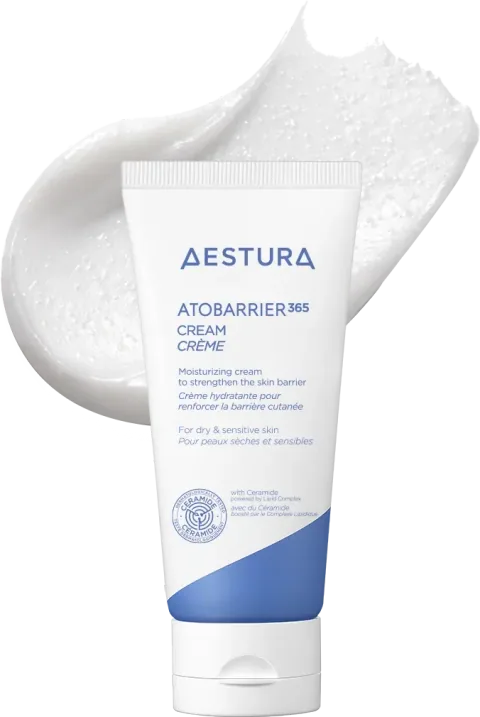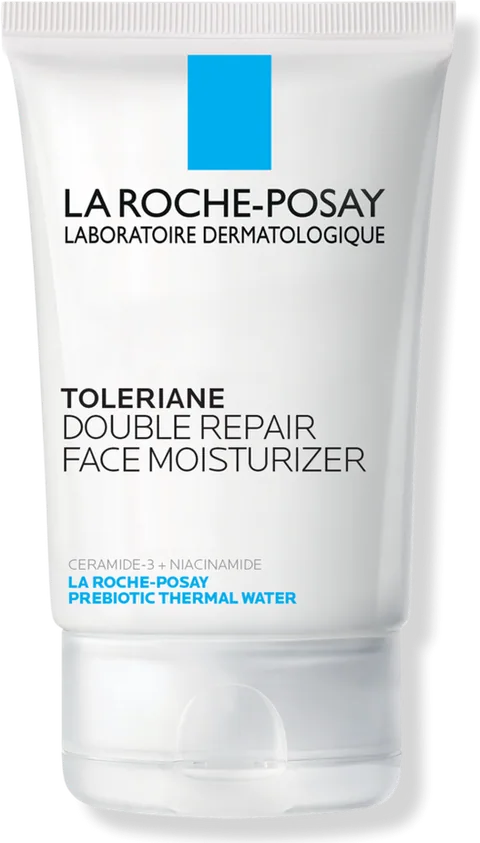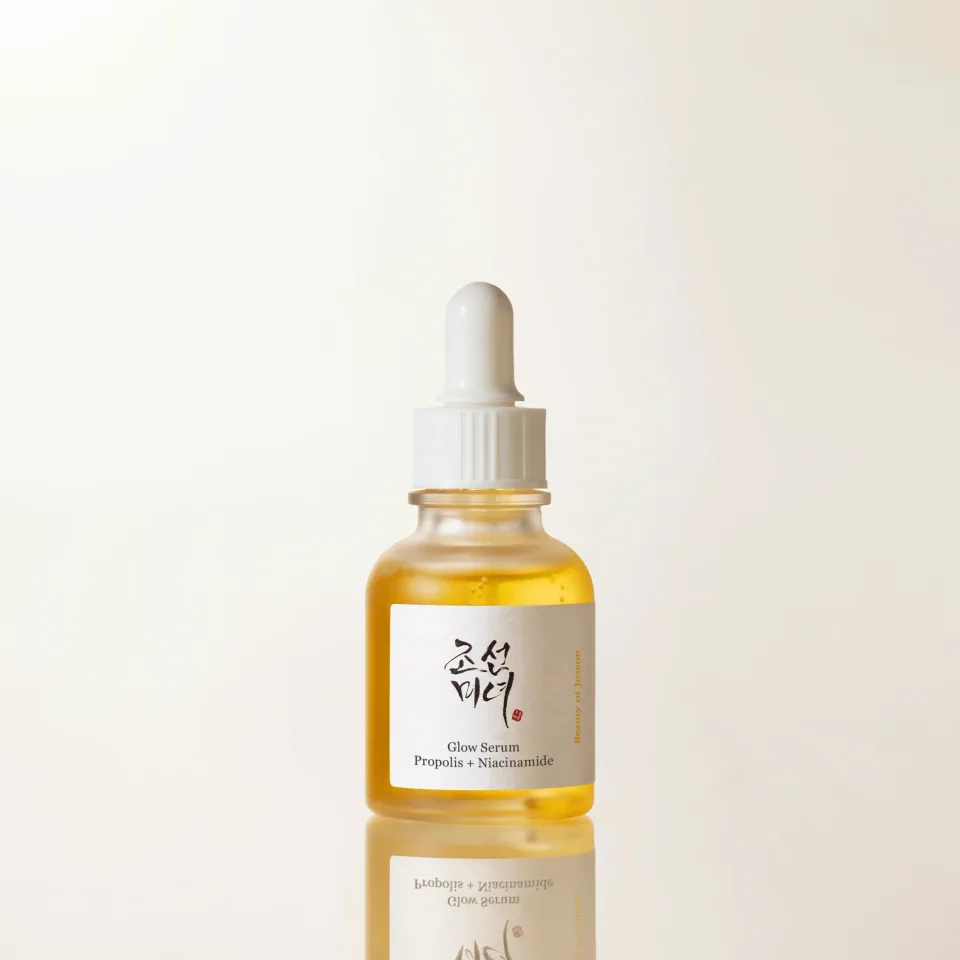
Niacinamide may be the most agreeable active in skincare. It's in serums, toners, moisturizers and sunscreens, it rarely causes trouble, and it's credited with nearly everything: oil control, smaller pores, brighter tone, calmer redness, a stronger barrier. Some of that is well supported. Some is a stretch. Here's what the studies actually show.
What niacinamide is
Niacinamide, also called nicotinamide, is the water-soluble, active form of vitamin B3 [1]. It's used in topical creams and gels and is often added to sunscreens and cosmetics [1]. Unlike nicotinic acid (niacin), another form of B3, it doesn't cause flushing [1].
DermNet notes that niacinamide is well tolerated and often suits people who can't tolerate topical retinoids or fruit acids [1]. That tolerability is a big part of its appeal.
What it can do
| Claim | Strength tested | Evidence | Our read |
|---|---|---|---|
| Less oil and shine | 2% | Two trials, 4–6 weeks [5] | Supported, modest |
| Fewer visible dark spots | 2%–5% | Several split-face trials [2][3][4] | Supported, reversible |
| Less red blotchiness, sallowness | 5% | 12-week split-face trial [2] | Supported, small study |
| Softer fine lines | 4%–5% | Small trials [1][2] | Modest |
| Stronger skin barrier | Lab and small human data | Increased ceramides, less water loss [6] | Plausible, limited human data |
| Mild acne | 4% gel | One trial vs. 1% clindamycin [1] | Promising, limited |
Oil and shine
In a set of trials published in 2006, a 2% niacinamide moisturizer significantly lowered the rate at which skin produced oil after two and four weeks in 100 Japanese participants compared with a placebo. In a separate six-week split-face study of 30 white participants, it reduced the amount of oil sitting on the skin's surface but didn't significantly reduce the oil production rate [5]. DermNet summarizes these results as reducing facial shine and oiliness [1].
That's a real but modest effect, seen with a low 2% concentration. It also explains why niacinamide is a staple in products for oily and combination skin.
Dark spots and uneven tone
Niacinamide doesn't work like many brighteners. In a 2002 study, it didn't block tyrosinase, the enzyme that makes melanin. Instead, it reduced the transfer of pigment packets (melanosomes) from pigment cells to surrounding skin cells by 35% to 68% in a lab model [3]. In the same paper's clinical tests, 18 people used 5% niacinamide on one side and a plain moisturizer on the other, and 120 people with facial tanning compared 2% niacinamide plus sunscreen with sunscreen alone. Niacinamide significantly reduced hyperpigmentation and lightened skin after four weeks [3].
A follow-up study found the effect is reversible. In cell cultures, pigment transfer resumed within three days after niacinamide was removed, and in a split-face trial, the reduction in dark spots was dose-dependent and reversible [4]. In plain terms: niacinamide helps while you use it, and you need sunscreen alongside it, because sun exposure keeps creating new pigment.
Redness, sallowness and fine lines
In a 12-week trial, 50 women with signs of facial sun damage applied 5% niacinamide to one side of the face and a vehicle to the other, twice daily. The niacinamide side showed reductions in fine lines and wrinkles, dark spots, red blotchiness and sallowness (yellowing), plus improved elasticity [2]. DermNet also cites a study of 30 Japanese women whose eyelid wrinkles improved after eight weeks of a 4% nicotinamide cosmetic [1].
These are encouraging results, but small, and the main researchers worked for a major skincare manufacturer [2][3]. That doesn't make the findings wrong, but independent replication is thin.
The skin barrier
Your skin barrier depends on lipids, especially ceramides, between the cells of the outer layer. In a 2000 study, niacinamide increased ceramide production four- to five-fold in cultured skin cells, and when applied to skin it raised ceramide and fatty acid levels in the outer layer and reduced water loss in dry skin [6]. That's a plausible mechanism for why niacinamide moisturizers often feel soothing, though the human data are limited. For a fuller plan, see our guide to skin barrier repair.
Mild acne
DermNet describes a controlled trial in which 4% nicotinamide gel was as effective as 1% clindamycin gel, a topical antibiotic, in 76 people with moderate acne; the authors credited its anti-inflammatory action [1]. Nicotinamide gel is sold over the counter for acne in several countries [1]. One trial isn't a large evidence base, and niacinamide is best seen as a gentle supporting player in an acne routine.
What it can't do
- Shrink pores permanently. Less oil can make pores look less prominent, but no topical niacinamide has been shown to change pore size for good.
- Replace sunscreen. Its effect on dark spots depends on also limiting sun exposure [3][4]. See how to choose a sunscreen.
- Work faster or better at 10%–20%. The trials above used 2% to 5% [1][2][3][5]. We haven't found published trials showing that higher strengths beat those levels, and some people find high-strength serums irritating.
- Exfoliate. It doesn't remove dead skin cells. For texture, see our guide to chemical exfoliants.
- Treat moderate or severe acne on its own. Proven options include adapalene and benzoyl peroxide, and a dermatologist can prescribe more. See retinol vs. retinal vs. adapalene.
- Prevent skin cancer from a serum. You may see headlines about nicotinamide and skin cancer. That research involved oral nicotinamide, 500 mg twice a day, in 386 people who'd already had at least two non-melanoma skin cancers. It lowered the rate of new ones by 23% over 12 months, and the benefit didn't last after people stopped [7]. It says nothing about topical niacinamide. If you're at high risk of skin cancer, that's a conversation for your dermatologist, not a supplement aisle.
Watch out: Don't start oral nicotinamide supplements on your own because of skin-cancer headlines. Talk to your doctor, particularly if you take other medications or have liver or kidney problems.
How to use niacinamide
- Choose a sensible strength. 2% to 5% matches the research [1][2][3][5]. Many moisturizers and sunscreens already include it, so check before adding a separate serum.
- Patch test. Even gentle actives can disagree with some people. The AAD recommends testing a new product on a small area twice daily for seven to 10 days [8].
- Use it once or twice a day. Trials applied it twice daily [2]. It works morning or night, under moisturizer.
- Pair freely, within reason. Niacinamide fits alongside retinoids, hyaluronic acid, sunscreen and, for most people, vitamin C. See our skincare routine guide for layering order.
- Give it four to 12 weeks. Oil and tone changes appeared at two to four weeks in some studies [3][5]; fine-line changes took 12 [2].
- Keep using it. The pigment effect reverses when you stop [4].
Who it suits
| Skin type | Why niacinamide fits |
|---|---|
| Oily and combination | Evidence for reduced shine and oil [5] |
| Acne-prone | Gentle, possible anti-inflammatory support [1] |
| Uneven tone, acne marks | Reduces pigment transfer while used [3][4] |
| Mature | Modest effects on fine lines, sallowness and elasticity [2] |
| Sensitive | Generally well tolerated [1], but patch test first |
Shopping tips
- Don't pay for percentage. A 5% serum isn't half as good as a 10% one; it's the strength the research actually used.
- Look at the whole formula. Fragrance, essential oils and high alcohol content are more likely to cause trouble for sensitive skin than niacinamide itself.
- Count what you already use. If your moisturizer and sunscreen both contain niacinamide, another serum may add little.
- Compare price per milliliter. Niacinamide is inexpensive to make; very high prices rarely mean better results. Our serums category scores value against direct rivals.
Bottom line: Niacinamide is a gentle, useful all-rounder with real, modest evidence for oil control, dark spots, redness and the skin barrier, mostly at 2% to 5%. It's a good addition to almost any routine, but it isn't a miracle, a sunscreen or an acne cure, and for persistent skin concerns a dermatologist is the right next step.
Ingredients in this story
Good questions.
What percentage of niacinamide is best?
Most of the clinical research used 2% to 5%: 2% for oil control, and 4% to 5% for dark spots, redness and fine lines. Many popular serums contain 10% or more, but published trials haven't shown that higher strengths work better. If a high-percentage serum makes you red or itchy, a 4% to 5% formula is a reasonable alternative.
Can I use niacinamide with vitamin C?
Yes, most people can. The worry about combining them comes from older chemistry under conditions such as heat that don't reflect how modern serums are made or stored. If you're layering a low-pH vitamin C, you can apply it first or use the two at different times of day, mainly to limit stinging.
Does niacinamide help with acne?
It can help mild acne. DermNet describes a trial in which 4% nicotinamide gel worked as well as 1% clindamycin gel in 76 people with moderate acne, and 2% formulas reduced facial oil in other studies. It isn't a substitute for proven acne treatments such as adapalene or benzoyl peroxide, and persistent or painful acne should be seen by a dermatologist.
Why does niacinamide make my face red or itchy?
Some people react to particular formulas, especially high-strength serums or products with other potential irritants. Unlike nicotinic acid, another form of vitamin B3, niacinamide is not known for causing flushing. If a product stings or itches, stop using it, patch-test a lower-strength formula, and see a dermatologist if a rash develops.
References
The research behind this guide — open any source to read the original.
- [1]Nicotinamide — DermNet
- [2]Niacinamide: A B vitamin that improves aging facial skin appearance — Dermatologic Surgery (2005), via PubMed
- [3]The effect of niacinamide on reducing cutaneous pigmentation and suppression of melanosome transfer — British Journal of Dermatology (2002), via PubMed
- [4]Effective inhibition of melanosome transfer to keratinocytes by lectins and niacinamide is reversible — Experimental Dermatology (2005), via PubMed
- [5]The effect of 2% niacinamide on facial sebum production — Journal of Cosmetic and Laser Therapy (2006), via PubMed
- [6]Nicotinamide increases biosynthesis of ceramides as well as other stratum corneum lipids to improve the epidermal permeability barrier — British Journal of Dermatology (2000), via PubMed
- [7]A Phase 3 Randomized Trial of Nicotinamide for Skin-Cancer Chemoprevention — New England Journal of Medicine (2015), via PubMed
- [8]How to test skin care products — American Academy of Dermatology
Educational content, not medical advice. Patch-test anything new, and see a dermatologist for persistent skin or scalp concerns. Our editorial standards
Discussion
What do you think?
No discussions yet.
Tried this article? Ask a question or share how it’s working for your skin or hair — you’ll be the first.