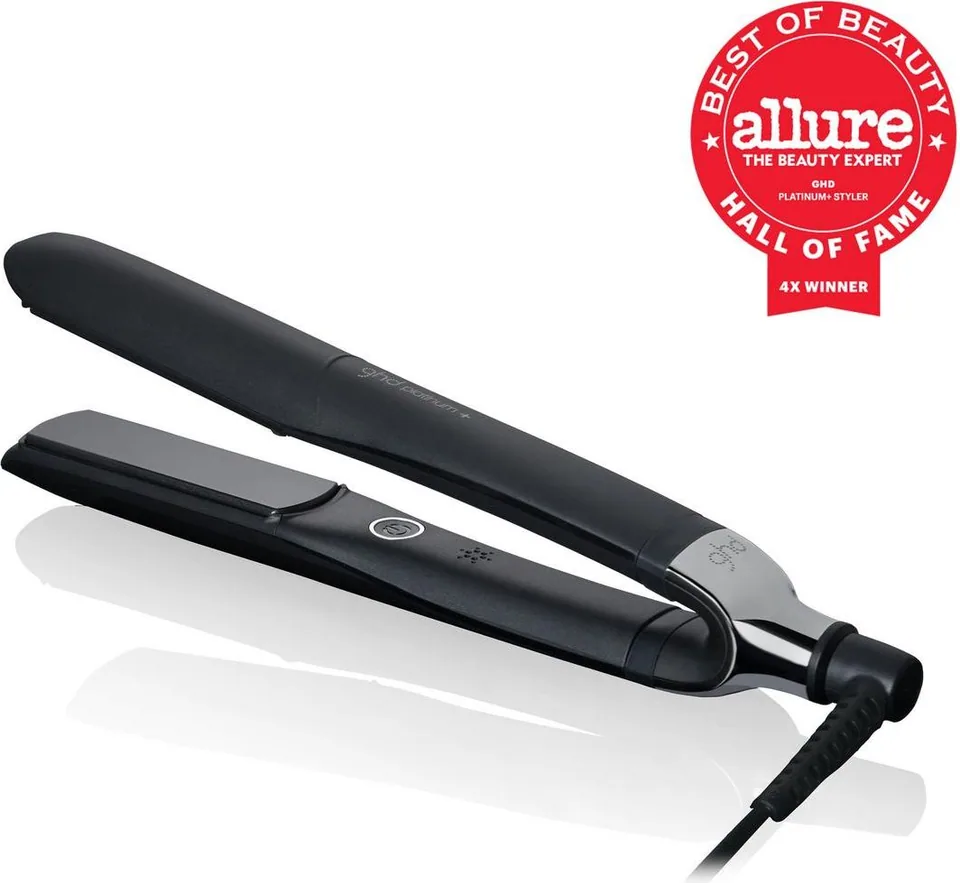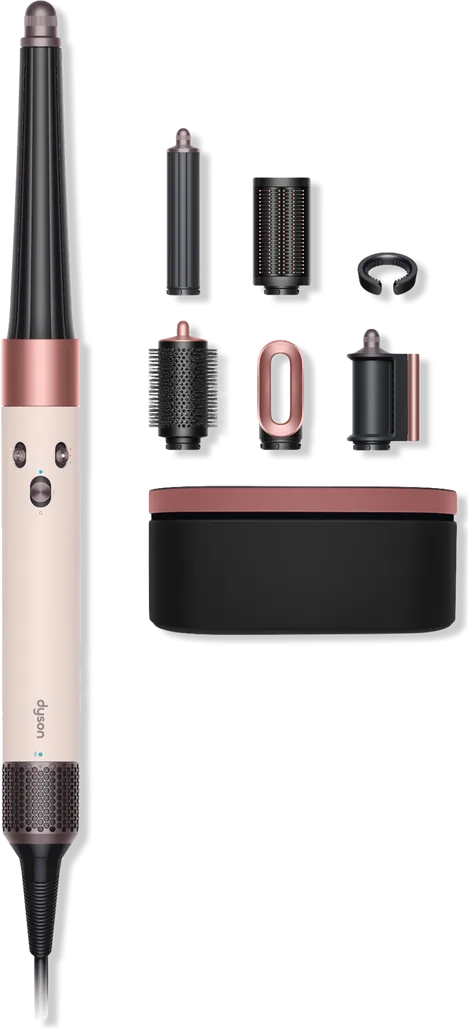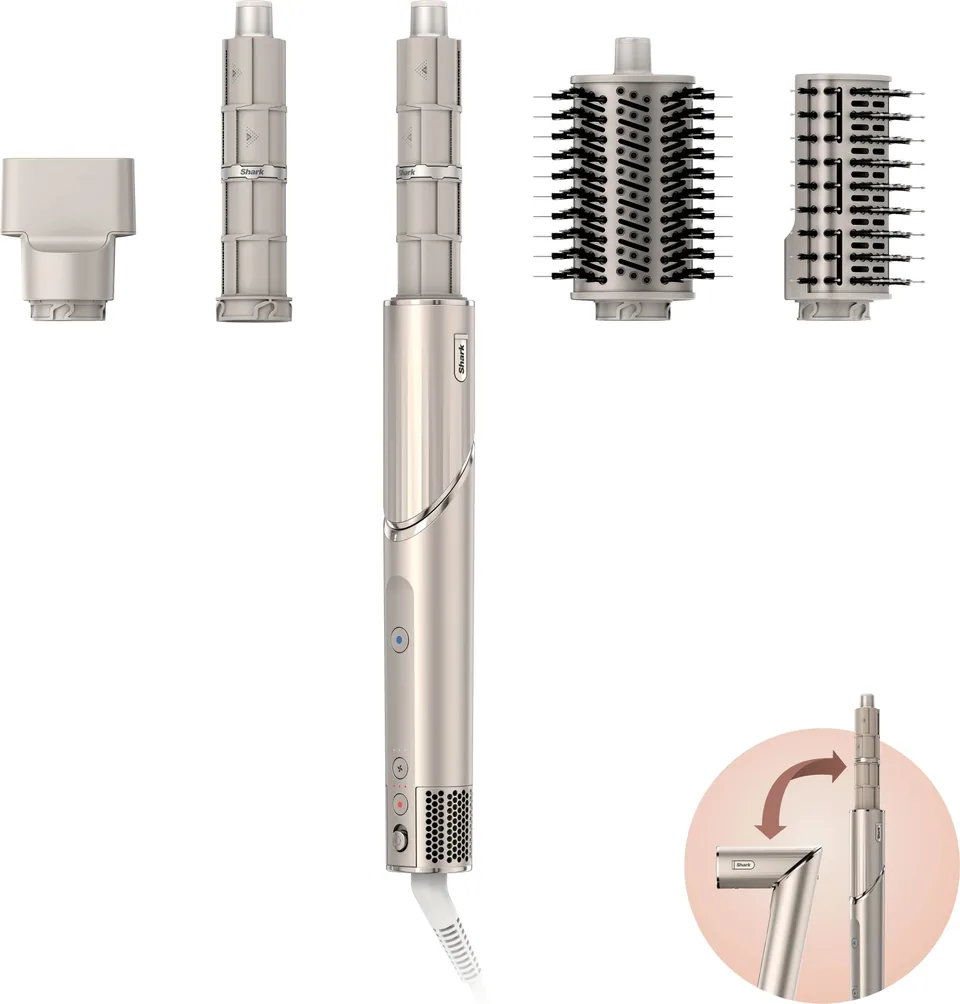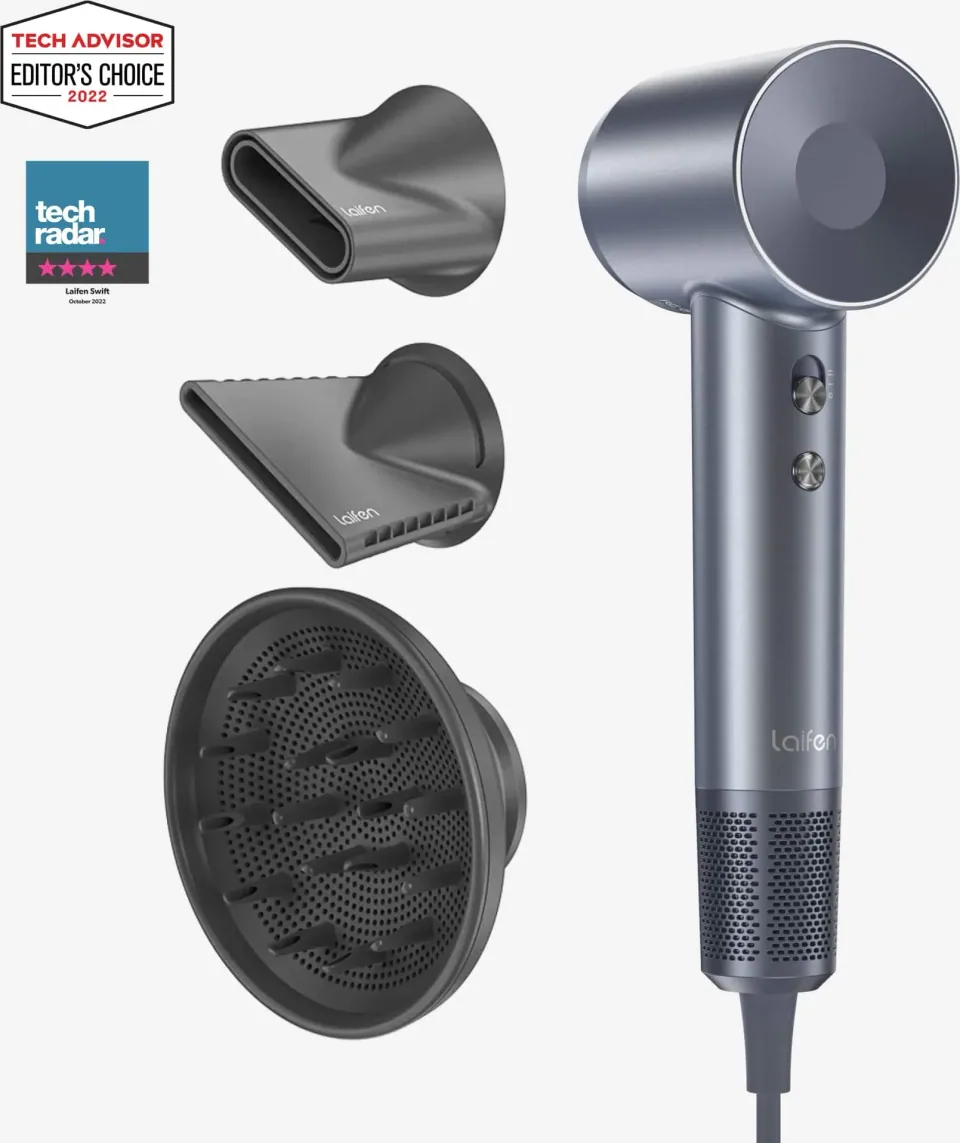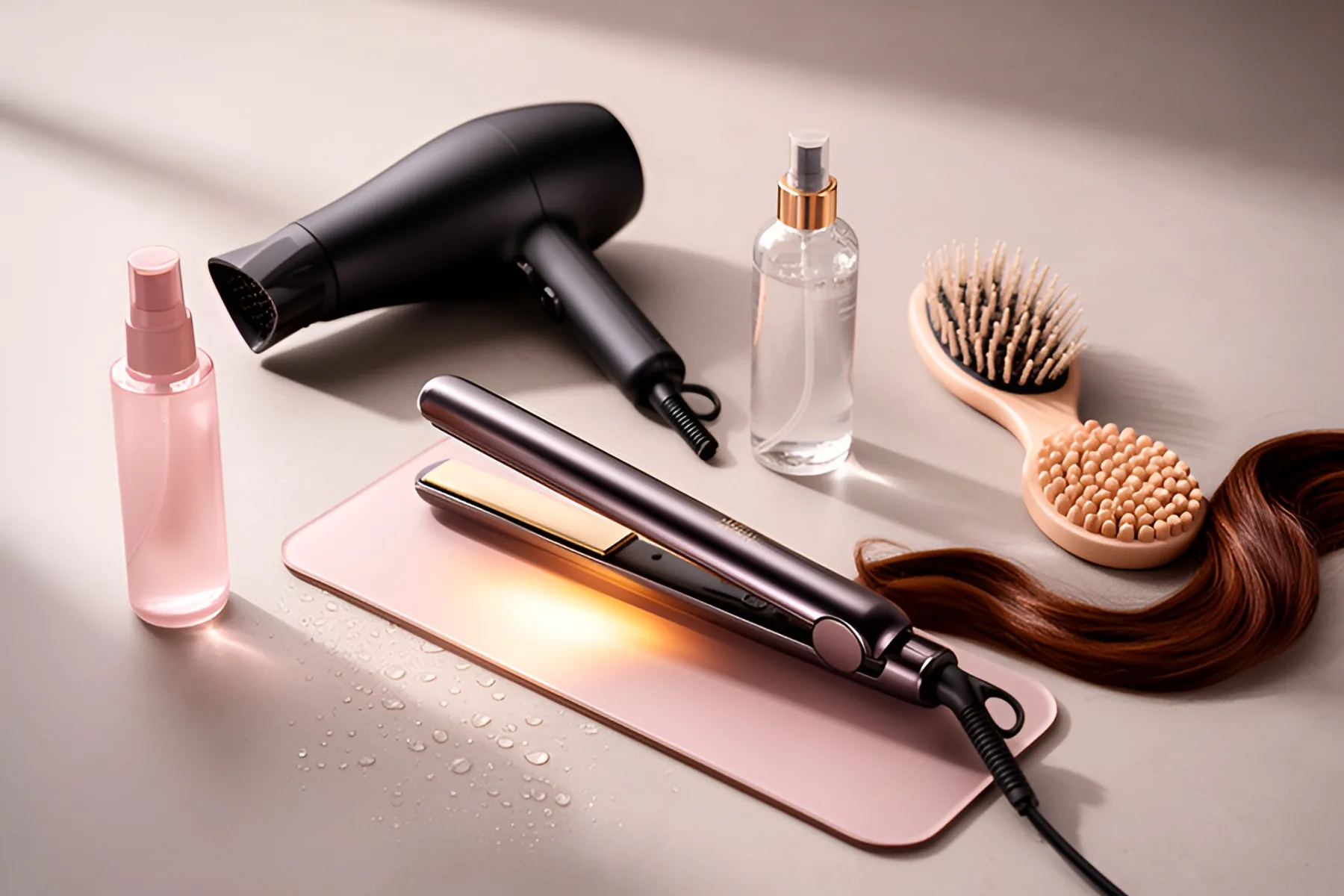
Hot tools are the fastest way to change how hair looks, and one of the fastest ways to wear it out. The good news is that heat damage isn't all-or-nothing. It depends on how hot, how long, how wet and how often, and you control all four.
We pulled together dermatologist guidance and the lab studies on dryers, flat irons and heat protectants. Here's what they show and how to translate them into settings.
What heat does to a hair fiber
A strand of hair has a protective outer cuticle of overlapping scales and an inner cortex made mostly of keratin protein. Heat affects both.
- Water leaves first. In a 2019 thermal analysis of virgin hair, water was driven off between about 25°C and 170°C (77–338°F) [6].
- Keratin starts to break down at styling-iron temperatures. The same study detected sulfur gases and carbon dioxide from about 200°C (392°F) and measured keratin denaturation at 237°C (459°F). Heat also visibly damaged the cuticle under the microscope [6].
- Hot flat irons can exceed those thresholds. A 2011 study noted that flat irons operate at over 200°C. Thermally stressed hair broke significantly more during combing [7].
- Different hair responds differently. The 2019 study found more protein loss from Asian than Caucasian hair, and the authors concluded that damage depended on hair type [6].
The American Academy of Dermatology (AAD) puts the practical result plainly. Excessive heat can damage hair regardless of hair type, and damaged hair is fragile, frizzy and prone to breakage [1][2].
Hotter isn't much better
This is the most useful finding for anyone who styles at the top setting. Researchers at TRI/Princeton used a curling iron with a temperature gradient to test many conditions at once. Higher temperatures did surprisingly little to improve how well hair held its curl. The onset of damage, however, was strongly temperature-dependent [5].
In other words, the last 50 degrees on the dial buy you more damage than hold.
The dermatologist temperature ceiling
In a 2008 AAD briefing, dermatologist Paradi Mirmirani noted that many ceramic flat irons reach 410°F (210°C). She cited research showing that 347–419°F (175–215°C) for as little as five minutes can damage most hair. Damage can occur at lower temperatures on damp or chemically treated hair [3]. Her advice:
- Use flat irons only on dry hair, and consider a heat protectant first.
- Set the iron no higher than 347°F (175°C), or use a low or medium setting.
- Limit use. She suggested probably no more than two to three times a week, depending on hair type [3].
The AAD's current consumer guidance is consistent and a little stricter. It calls for flat irons on dry hair at low or medium heat, no more than every other day. Curling irons should stay in place for only a second or two [1]. Its list of damaging habits suggests the lowest heat setting and aiming to use hot tools about once a week or less [2].
Starting points by hair type
No study maps exact temperatures to hair types, and tool dials vary. The table below is our editorial starting point, built around the AAD ceiling. Begin at the low end and go up only if one or two slow passes won't hold.
| Hair | Start around | Notes |
|---|---|---|
| Fine, bleached, highlighted or relaxed | 250–300°F (120–150°C) | Treated hair can be damaged at lower heat [3] |
| Normal, healthy, medium texture | 300–340°F (150–170°C) | Stay at or under 347°F (175°C) [3] |
| Thick, coarse or very curly, untreated | Up to 347°F (175°C) | Work in smaller sections rather than raising heat |
Watch out: "Titanium" and "ceramic" describe plate materials, not safety. A plate that heats quickly and evenly at 450°F is still at 450°F. The number on the dial matters more than the material.
Blow-drying: distance beats everything
The most cited dryer study comes from Yonsei University in Korea [4]. Researchers shampooed and dried hair tresses 30 times under five conditions:
| Group | Method | Temperature at the hair |
|---|---|---|
| A | No treatment | — |
| B | Air-dried at room temperature | 20°C (68°F) |
| C | Dryer at 15 cm (about 6 in), 60 seconds | 47°C (117°F) |
| D | Dryer at 10 cm (about 4 in), 30 seconds | 61°C (142°F) |
| E | Dryer at 5 cm (about 2 in), 15 seconds | 95°C (203°F) |
The results:
- Surface damage increased as the temperature rose.
- None of the groups showed damage to the cortex, suggesting the cuticle acts as a barrier.
- Only the air-dried group showed damage to the cell membrane complex, the "glue" between cells. The authors suggest that long periods of soaking wet hair have their own cost.
- Moisture content fell in all treated groups, but the differences between groups weren't statistically significant.
- Hair color shifted lighter after just 10 treatments in the air-dried and 95°C groups [4].
The authors' conclusion: using a dryer at about 15 cm with continuous motion caused less damage than letting hair dry naturally [4]. That's a lab result on hair tresses, not people, but it fits the AAD's advice to let hair partially air-dry before styling and to blow-dry less often [1].
How to put it into practice:
- Blot hair with a towel or T-shirt rather than rubbing [2][10].
- Let it air-dry partway.
- Dry at medium heat with the nozzle about 6 inches (15 cm) away, keeping the dryer moving.
- Switch to a cool shot once hair is nearly dry.
Heat protectants: what they can and can't do
Heat protectants don't make hair heat-proof. The evidence supports a narrower role.
They can reduce some damage. In a 2011 flat-iron study, pretreating hair with certain film-forming polymers reduced keratin breakdown and breakage. These included VP/acrylates/lauryl methacrylate copolymer, polyquaternium-55, and a combination of PVM/MA copolymer with polyquaternium-28. The treated hair also kept a smoother cuticle and held moisture better [7]. That study came from an ingredient supplier's lab, so treat it as evidence that the polymers can work, not as a ranking of products.
They spread heat more evenly. Cosmetic chemist Michelle Wong explains that protectants form a film that distributes heat, helping avoid hot spots where some hair breaks down while other strands stay too cool to style [9]. She also debunks the viral "lighter test": whether a product catches fire says nothing about how well it protects hair [9].
Water is the catch. University of Manchester researchers flat-ironed hair after applying either a water-based or an ethanol-based protectant spray. Both reduced chemical damage to the amino acid tryptophan. However, the water-based spray caused more structural damage and a greater loss of stiffness in tensile tests. The likely cause is water flashing to steam inside the fiber [8]. Wong describes the same mechanism, which can create bubbles inside hair [9].
Tip: Apply protectant to damp hair before blow-drying, then make sure hair is completely dry before a flat iron touches it. If you add a second layer, choose a dry or alcohol-based mist rather than a watery spray right before ironing.
Technique matters as much as temperature
- Smaller sections, fewer passes. Thin sections heat through evenly at lower temperatures, so one slow pass can do the work of several fast passes at high heat.
- Short contact time. With curling irons and wands, the AAD suggests holding for only a second or two [1].
- Space out sessions. Aim for every other day at most, and ideally less [1][2].
- Protect lengths that are already fragile. Bleached ends get the least heat, or none.
- Keep the basics. Use conditioner after every shampoo and handle wet hair gently [2][10].
If your hair is already breaking, the AAD advises avoiding heat and chemical treatments, trimming damaged ends and reducing friction. Recovery from badly damaged hair can take up to two years [3]. Bond-building treatments may help hair look and feel better in the meantime; see our explainer on Olaplex vs. K18.
Choosing tools and products
When we score hair dryers and hot tools, we look for features that make lower-heat styling easier. That means adjustable temperature with a readable display, stable heat across the plate or barrel, a reliable cool setting and a design that's comfortable enough to keep moving. For heat protectants and styling products, we look for named film-formers and a format that dries quickly. Details are in how we score.
When it isn't just heat damage
Breakage is usually a hair-shaft problem. But thinning at the scalp, patchy loss, scalp soreness or scaling are different issues that styling products can't address. If you notice any of them, see a board-certified dermatologist [1].
Bottom line: Use less heat, less often, and only on dry hair. Keep flat irons at or below about 347°F (175°C), hold the dryer about 6 inches away, use a protectant that's fully dry before ironing, and accept that the top setting mostly buys damage.
Good questions.
What temperature should I set my flat iron to?
The American Academy of Dermatology has suggested no higher than 347°F (175°C), or a low or medium setting. Start lower than that if your hair is fine, bleached, colored or chemically treated, since damage can occur at lower heat in treated hair. Raise the temperature in small steps only if hair won't hold a style in one or two slow passes.
Is it worse to air-dry or blow-dry?
Neither is damage-free. A Korean lab study that dried hair tresses 30 times found that a dryer held 15 cm away and kept moving caused less overall damage than air-drying, which damaged a deeper layer of the hair, while a dryer held 5 cm away (about 95°C at the hair) caused the most surface damage. The practical answer is to let hair partially air-dry, then finish at a distance with moderate heat.
Do heat protectants actually work?
Lab studies show some protective polymers reduce keratin breakdown and breakage from hot flat irons, and protectant sprays reduce some chemical markers of heat damage. They work best as part of good technique, not as permission to use maximum heat. In one study a water-based spray increased structural damage under a flat iron compared with an alcohol-based one, so make sure any spray is dry before you iron.
Can heat-damaged hair be repaired?
Not truly. Conditioners and bond-building treatments can make damaged hair smoother and less prone to breaking, but the AAD notes that fully recovering from badly damaged hair can take up to two years as it grows out. Trimming damaged ends and cutting back on heat and chemical services are the most reliable steps. See a board-certified dermatologist if you notice breakage near the scalp or patchy loss.
References
The research behind this guide — open any source to read the original.
- [1]Hair styling without damage — American Academy of Dermatology
- [2]10 hair care habits that can damage your hair — American Academy of Dermatology
- [3]Dermatologists Warn Ceramic Flat Irons Could Damage Hair and Lead to Hair Breakage — American Academy of Dermatology news release (2008), via Newswise
- [4]Hair shaft damage from heat and drying time of hair dryer — Annals of Dermatology (2011), via PubMed
- [5]Thermal styling: efficacy, convenience, damage tradeoffs — Journal of Cosmetic Science (2011), via PubMed
- [6]Heat-damaged evaluation of virgin hair — Journal of Cosmetic Dermatology (2019), via PubMed
- [7]The effect of various cosmetic pretreatments on protecting hair from thermal damage by hot flat ironing — Journal of Cosmetic Science (2011), via PubMed
- [8]The effects of water on heat-styling damage — Journal of Cosmetic Science (2011), via PubMed
- [9]Can you test heat protectants with fire? The Science — Lab Muffin Beauty Science
- [10]Tips for healthy hair — American Academy of Dermatology
Educational content, not medical advice. Patch-test anything new, and see a dermatologist for persistent skin or scalp concerns. Our editorial standards
Discussion
What do you think?
No discussions yet.
Tried this article? Ask a question or share how it’s working for your skin or hair — you’ll be the first.