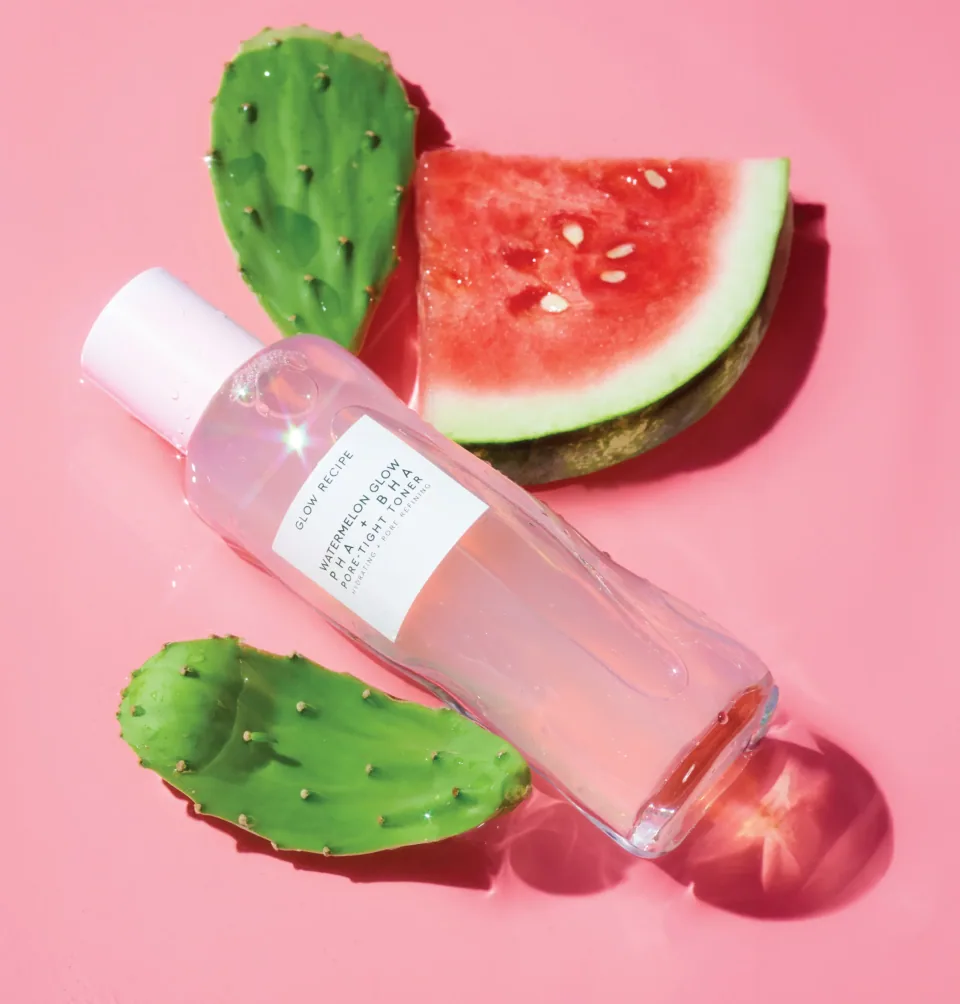
Glow Recipe
Watermelon Glow PHA + BHA Pore-Tight Toner
7.5Good
A hydrating, low-strength PHA + BHA toner that smooths and refines pores gently, at a premium price for its acid dose.
Toner5$36.00
Exfoliants & acne actives· in 1 product
Also listed as Gluconolactone, Lactobionic acid, Galactose and Polyhydroxy acids
Polyhydroxy acids (PHAs), mainly gluconolactone and lactobionic acid, are large-molecule exfoliants that work like AHAs but more gently. They also attract water, so they suit sensitive and dry skin.
What it does
PHAs loosen dead surface cells to smooth and brighten skin, but their large molecules penetrate slowly, which limits stinging. Their many hydroxyl groups bind water, giving a humectant, moisturizing effect, and they have antioxidant (chelating) properties. Brands position them for people who cannot tolerate glycolic acid, including some with rosacea- or eczema-prone skin.
Emerging evidence
Early clinical studies (several authored by researchers linked to the companies that developed PHAs) found antiaging effects comparable to an AHA regimen with less irritation; recent independent studies are small and focus on hydration measurements.
In our directory: It’s a key ingredient in 1 product we review, most often exfoliants & masks. Those products are mostly built for pore refining, clogged pores and smoothing. In formulas, it most often shares the label with salicylic acid, glycerin and hyaluronic acid.
Reach for it for
Usually a good fit for
How to use it
Apply after cleansing, once daily or every other day, before moisturizer. Use sunscreen daily.
Layering
Pairs well with
Go slow with
Not forbidden — just easier to over-do. Alternate nights or separate morning and evening.
Before you start
Less irritating than AHAs but still exfoliants: stop if stinging or redness persists and avoid broken skin. Gluconolactone is related to AHAs, so sun protection is still sensible.
References
Educational, not medical advice. Ingredient guides summarise published research and expert guidance; formulas and concentrations differ between products.
1 product
1 product
Glow Recipe
A hydrating, low-strength PHA + BHA toner that smooths and refines pores gently, at a premium price for its acid dose.
More exfoliants & acne actives