Retinoids are some of the best-studied ingredients in skincare, and some of the most confusing to shop for. Three kinds are easy to buy without a prescription in the US: retinol, retinal (retinaldehyde) and adapalene. They are not interchangeable. Two are cosmetic ingredients that work by being converted in the skin; the third is an over-the-counter acne drug. Here's how they differ, what the evidence supports, and how to start without wrecking your skin barrier.
Note: This article is general information, not medical advice. For acne that's moderate or severe, scarring, rosacea or any skin condition, see a board-certified dermatologist, who can also prescribe stronger options such as tretinoin.
What "retinoid" means
"Retinoid" is the umbrella term for vitamin A-based ingredients used on skin [1]. The one that actually switches on retinoid activity in skin cells is retinoic acid (tretinoin, a prescription drug). Cosmetic retinoids have to be converted into it:
Retinyl esters → retinol → retinal (retinaldehyde) → retinoic acid
Each step toward retinoic acid tends to mean more activity and, often, more potential for irritation. Adapalene sits outside this chain: it's a synthetic, third-generation retinoid that acts on retinoid receptors directly and selectively [4].
The three side by side
| Retinol | Retinal (retinaldehyde) | Adapalene | |
|---|---|---|---|
| What it is | Cosmetic vitamin A | Cosmetic vitamin A, one step closer to retinoic acid | Synthetic retinoid; OTC acne drug in the US since 2016 [2] |
| How it's regulated | Cosmetic; strength often not disclosed [1] | Cosmetic; strength often not disclosed | Drug Facts label, fixed 0.1% gel |
| Typical strengths | Roughly 0.1%–1% | Roughly 0.05%–0.1% | 0.1% OTC; 0.3% by prescription |
| Main evidence | Aging signs, small trials [6][7] | Biological activity and tolerance studies [5] | Acne, many clinical trials; photoaging at 0.3% [8] |
| Irritation | Low to moderate | Moderate | Least irritating of the drug retinoids, per DermNet [4] |
| Best for | Beginners focused on texture and fine lines | People who tolerate retinol and want more | Breakouts and clogged pores |
Retinol
Retinol is the retinoid you'll see in most serums and night creams. The AAD describes it as routinely used to improve uneven tone, pigmentation and texture [1]. The catch: there's no requirement that brands disclose the retinol percentage on the label [1], so "contains retinol" can mean almost anything.
The evidence is real but modest. In one of the better trials, researchers at the University of Michigan applied 0.4% retinol lotion to one arm and a placebo to the other in 36 older adults (average age 87), up to three times a week for 24 weeks. Fine wrinkling improved significantly on the retinol side, and biopsies showed more glycosaminoglycans and procollagen [6]. That was arm skin, in a very elderly group, with lotion applied by study staff, not a typical shopper's face.
A 2021 systematic review took a harder look. It found nine randomized, double-blind, vehicle-controlled trials of over-the-counter retinol for facial aging: four showed no significant difference from the vehicle, and the other five offered weak evidence of a mild effect on fine lines, with major methodological flaws [7]. A 2022 review reached a similar conclusion about cosmetic retinoids in general: well-designed trials are lacking [9].
Our read: Retinol is a reasonable, gentle first retinoid, and plenty of people like what it does for texture. Just don't expect prescription-level results, and favor brands that state their percentage.
Retinal (retinaldehyde)
Retinal is retinol's next step in the conversion chain. In a 1994 study from Geneva, researchers ranked how strongly different vitamin A forms switched on a marker of retinoid activity in human skin: retinoic acid first, then retinaldehyde, then 9-cis retinoic acid, then retinol [5]. In the same work, 0.05% and 0.1% retinaldehyde on the face were well tolerated, allowing use for up to three years in some patients, while a 1% preparation was tolerated by up to 70% of people [5].
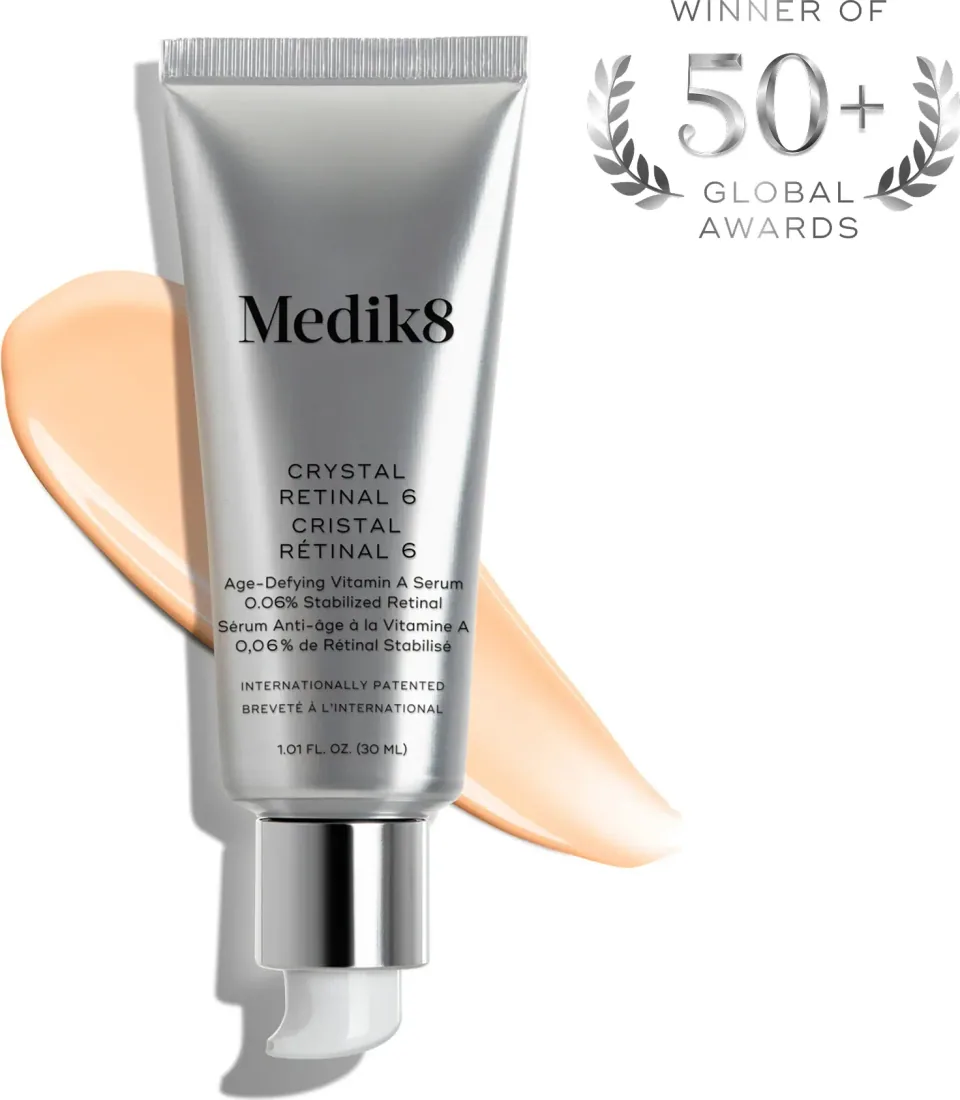
Practically, that means a retinal serum at 0.05%–0.1% is generally considered stronger than a retinol at the same number. If you've used retinol comfortably for a few months and want more, retinal is the logical next step. If you've never used a retinoid, it's a bigger first step than retinol.
Adapalene
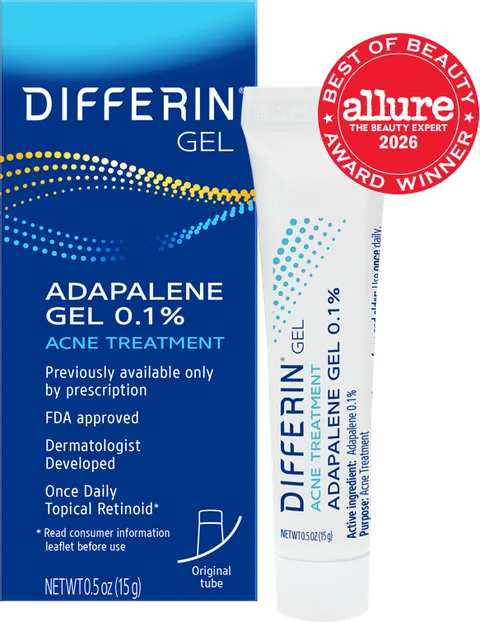
Adapalene 0.1% gel moved from prescription to over-the-counter status in the US in 2016, which increased access and lowered costs [2]. It is a drug: it carries a Drug Facts label, a fixed strength and directions for acne. DermNet describes adapalene as the least irritating topical retinoid and tretinoin as the most [4].
What to expect, according to MedlinePlus: your skin may be dry or irritated during the first two to four weeks, acne may look worse at first as hidden pimples surface, and it may take 8 to 12 weeks or longer to see the full benefit [3]. Applying more, or more often, won't speed things up; it just irritates [3].
Adapalene also has some evidence for photoaging, but at a different strength. A 24-week Brazilian trial found prescription adapalene 0.3% gel non-inferior to tretinoin 0.05% cream for signs of sun damage such as wrinkles and dark spots [8]. That doesn't mean the OTC 0.1% gel is an anti-aging product, and using it that way is off-label.
Which one should you start with?
| Your main goal | A sensible first pick |
|---|---|
| Occasional breakouts, clogged pores, blackheads | Adapalene 0.1% gel, used as directed |
| Uneven texture, early fine lines, sensitive or dry skin | A low-strength retinol with a disclosed percentage |
| Already tolerate retinol, want a step up | Retinal at 0.05%–0.1% |
| Moderate or severe acne, scarring, hormonal acne | A dermatologist visit before any retinoid [1] |
| Lots of redness or inflammation | A dermatologist visit; retinoids may not suit you [1] |
How to start without irritation
Dermatologists quoted by the AAD advise using the least intense retinoid you can find, starting every other night and building up slowly, applying it only at night, and protecting your skin from the sun during the day [1].
- Use a pea-sized amount for the whole face, on clean, dry skin. More product means more irritation, not faster results [3].
- Start two or three nights a week. Increase toward nightly over several weeks if your skin stays comfortable.
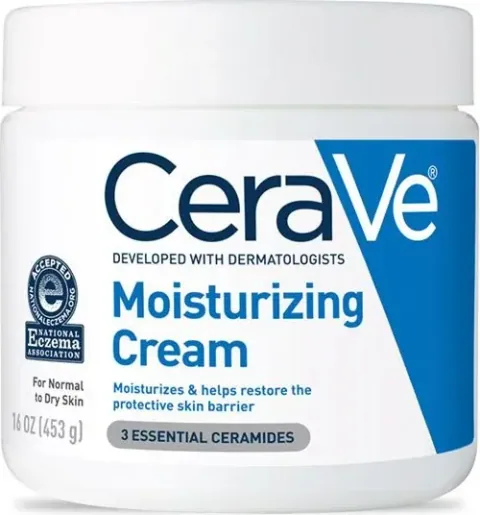
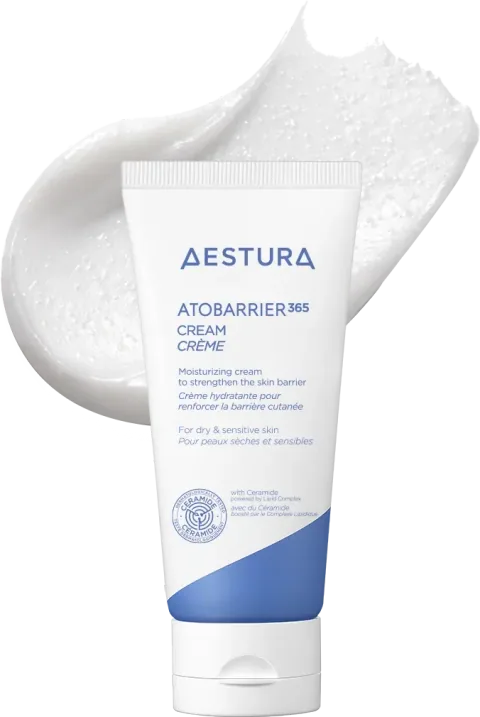
- Moisturize. Apply moisturizer after the retinoid, or "sandwich" it between two thin layers of moisturizer if you're dry or sensitive. DermNet notes creams are the least irritating retinoid vehicles [4].
- Keep it away from eyes, lips and the corners of the nose, where irritation is most likely [4].
- Wear sunscreen every morning. Retinoids can increase sun sensitivity [1][3][4]. See our sunscreen guide.
- Don't stack strong actives. Keep exfoliating acids and benzoyl peroxide off retinoid nights at first. Our skincare routine guide shows how to alternate.
Watch out: People with darker skin tones should be especially careful: irritation from a retinoid can trigger dark marks (hyperpigmentation). Starting slowly and moisturizing helps reduce that risk [1].
What's normal and what isn't
Mild dryness, flaking and a little redness in the first weeks are common [3]. Stop and seek advice if you have burning or stinging that doesn't settle, swelling, or a rash. Don't apply retinoids to sunburned, broken or eczema-affected skin [3].
Who should skip retinoids
- Pregnant people. The AAD advises avoiding retinoids during pregnancy, including over-the-counter retinol and adapalene [1][10]. If you're trying to conceive or breastfeeding, ask your doctor.
- People with eczema or very dry skin. Retinoids can make eczema worse because they're drying [4], and the AAD says people with skin allergies or dryness are probably not good candidates [1].
- People with rosacea-type redness. Ask a dermatologist about therapies aimed at rosacea instead [1].
Shopping tips
- Look for a stated percentage. It lets you compare products and step up deliberately [1].
- Check the packaging. Retinoids are known to be unstable [9]; opaque, airless pumps or tubes protect them better than clear jars.
- Be wary of "retinol alternatives." Ingredients such as bakuchiol are sometimes marketed as retinol substitutes. They may be gentler, but they aren't retinoids and have a smaller evidence base.
- Prioritize consistency over strength. A gentle retinoid you use three to five nights a week for months will usually do more than a strong one you abandon after two weeks of peeling.
Browse picks in serums and treatments, and pair them with a soothing option from moisturizers.
Bottom line: For breakouts, start with adapalene 0.1%. For texture and early fine lines, start with a gentle retinol and move to retinal once your skin is comfortable. Go slow, use it at night, moisturize, wear sunscreen, skip it during pregnancy, and see a dermatologist for anything beyond mild concerns.
Ingredients in this story
Good questions.
Is retinal better than retinol?
Retinal (retinaldehyde) is one conversion step closer to retinoic acid, the form that acts on skin cells, and early research ranked its biological activity above retinol's. That usually means a lower percentage of retinal can do what a higher percentage of retinol does, sometimes with more irritation. Head-to-head trials of finished consumer products are scarce, so formula, strength and how consistently you use it matter as much as the molecule.
Can I use adapalene for wrinkles?
Over-the-counter adapalene 0.1% is labeled for acne, not aging. A prescription-strength 0.3% adapalene gel performed comparably to tretinoin 0.05% for photoaging in a 24-week trial, which suggests adapalene can affect signs of sun damage, but that is a different strength and an off-label use. If your main goal is fine lines, ask a dermatologist which option fits.
How long does it take for a retinoid to work?
For acne, MedlinePlus says adapalene may take 8 to 12 weeks or longer to show its full benefit, and breakouts can look worse in the first few weeks. For texture and fine lines, studies of retinol ran 12 to 24 weeks. Expect dryness or flaking during the first two to four weeks while your skin adjusts.
Can I use a retinoid with vitamin C or niacinamide?
Usually yes, with some planning. Many people use vitamin C in the morning and a retinoid at night, which also matches the advice to use retinoids only at night. Niacinamide is generally well tolerated and often included in retinoid formulas. Avoid layering a retinoid with strong exfoliating acids or benzoyl peroxide on the same night until your skin is used to it.
References
The research behind this guide — open any source to read the original.
- [1]Retinoid or retinol? — American Academy of Dermatology
- [2]Rx -to- OTC switch increased access and lowered cost of topical adapalene — Archives of Dermatological Research (2024), via PubMed
- [3]Adapalene: MedlinePlus Drug Information — MedlinePlus, U.S. National Library of Medicine
- [4]Topical retinoids (vitamin a creams) — DermNet
- [5]Topical retinaldehyde on human skin: biologic effects and tolerance — Journal of Investigative Dermatology (1994), via PubMed
- [6]Improvement of naturally aged skin with vitamin A (retinol) — Archives of Dermatology (2007), via PubMed
- [7]Evidence for the Efficacy of Over-the-counter Vitamin A Cosmetic Products in the Improvement of Facial Skin Aging: A Systematic Review — Journal of Clinical and Aesthetic Dermatology (2021), via PubMed
- [8]Comparable efficacy of adapalene 0.3% gel and tretinoin 0.05% cream as treatment for cutaneous photoaging — European Journal of Dermatology (2018), via PubMed
- [9]Use of Retinoids in Topical Antiaging Treatments: A Focused Review of Clinical Evidence for Conventional and Nanoformulations — Advances in Therapy (2022), via PubMed
- [10]Dermatologist-approved pregnancy skin care — American Academy of Dermatology
Educational content, not medical advice. Patch-test anything new, and see a dermatologist for persistent skin or scalp concerns. Our editorial standards
Discussion
What do you think?
No discussions yet.
Tried this article? Ask a question or share how it’s working for your skin or hair — you’ll be the first.